
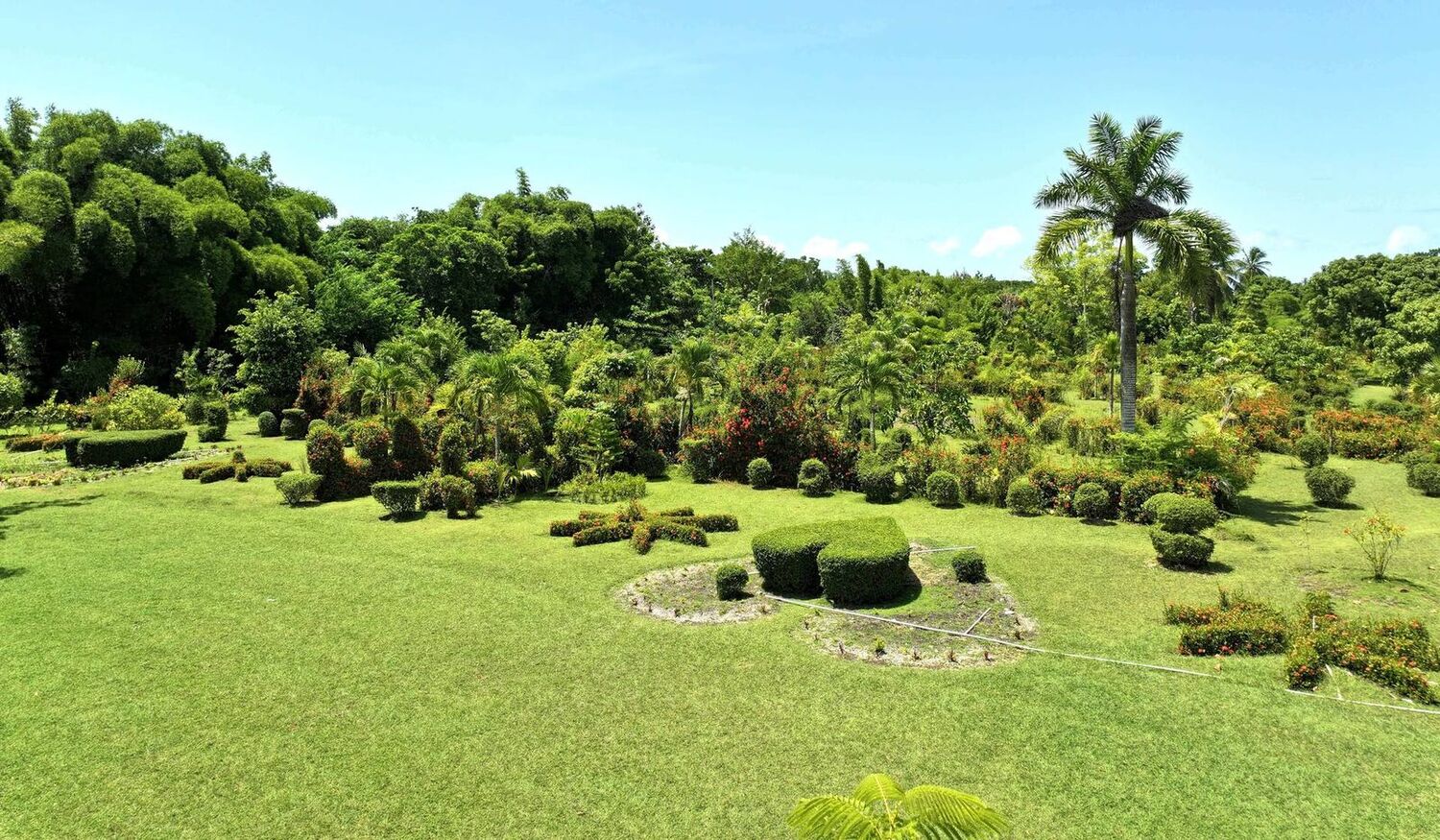
By William Cinéa — Founder of Botapreneurs and of the Jardin Botanique des Cayes.
In 2003, I founded the Jardin Botanique des Cayes, in Haiti, with less than 50 dollars. Twenty years later, it has become a center for research, education and conservation — a kind of “green brain” for an entire territory. I say this right away, because a decision-maker’s first objection is always the same: “it’s too expensive, too complex, it’s not for us.” That is false. A botanic garden is not a luxury for rich countries. It is a strategic infrastructure — just like a library, a hospital or a university — and one of the most profitable in the long run.
Here are ten reasons, from a decision-maker’s point of view, to build this garden for your city or your country.
1. Strengthen food security
Every territory has local food plants — fruits, leaves, roots, tubers, edible wild species — often better adapted to the climate than imported crops, and yet forgotten. A botanic garden documents them, propagates them and reintroduces them into the diet. It is an insurance against dependence on imports and against climate shocks on crops.
2. Support public health through plants
Medicinal and aromatic plants are part of the daily life of millions of people, but their use is passed on without any framework, sometimes with risks. A botanic garden makes it possible to document these uses with rigor, to distinguish useful species from dangerous ones, and to support a prevention approach based on knowledge — always with caution and without replacing medicine.
3. Restore ecosystems and face the climate
Faced with soil degradation, drought and floods, ecological restoration is becoming urgent. But you do not restore an ecosystem by planting just any tree: you must know the native and pioneer species, those that stabilize slopes, retain water or feed pollinators. A botanic garden is the reservoir of this knowledge — and the nursery of the species that will make your territory more resilient.
4. Conserve your flora and your heritage
Many local species, sometimes endemic or threatened, disappear before they are even studied. Conserving them means protecting a living heritage: genetic, ecological, cultural and identity-related. A botanic garden is the institution that keeps this memory — a “living bank” that cannot be rebuilt once it is lost.
5. Train a generation of experts
A botanic garden is above all a living school. It trains horticulturists, phytotherapists, ecologists, ethnobotanists, guides and green entrepreneurs. For a city, it is a concrete way to create local skills and to retain its young talents around a mission that makes sense.
6. Create jobs and a green economy
Nurseries, natural products, visits, training, consulting, landscaping, ecotourism: around a botanic garden a whole economic ecosystem develops. Well managed, it does not merely cost public money — it generates it, and supports families.
7. Produce data for decision-making
We only manage well what we know. A botanic garden generates precious data on the species of your territory: what grows, where, under what conditions, with what uses and what risks. This data becomes a decision-support tool for agriculture, urban planning, health and conservation.
8. Improve urban planning
Too many cities choose their plants on their appearance alone: excessive watering, unsuitable species, allergenic or toxic plants in public spaces, loss of biodiversity. A botanic garden brings the expertise to choose the right species — those that withstand drought, cool the streets, retain water and feed wildlife. Greener, safer cities that cost less to maintain.
9. Strengthen tourism, pride and outreach
A botanic garden attracts visitors, schools, researchers and the media. It becomes a place of local pride and a showcase for the territory — a concrete symbol that a community takes care of its living world. Recognition, national as well as international, follows naturally.
10. Build a lasting and self-sustaining legacy
A political mandate lasts a few years; a botanic garden can last for generations. It is one of the rare institutions that, once well founded, becomes self-sustaining and continues to serve the community long after those who launched it. It is a legacy — and few decisions leave a trace this alive.
You can start small
The greatest mistake would be to believe that you need an enormous budget to start. The Jardin Botanique des Cayes began with 50 dollars, a passion and a method. What you need first is not money: it is a vision, a piece of land, and guidance to avoid costly mistakes.
That is exactly what we do at Botapreneurs: we help cities, ministries, institutions and families to design, build and bring to life their botanic garden — step by step, according to their means.
If you lead a city, an institution or a project, let’s talk. Your community deserves a space where knowledge, health and opportunity grow together. Let’s build your botanic garden — and your legacy.
About the author — William Cinéa is a botanist-entrepreneur, holder of a master’s degree in botanical garden leadership (Cornell) and a certified nature interpreter. Founder of the Jardin Botanique des Cayes and of Botapreneurs, he serves on the International Advisory Council of BGCI and supports communities around the world in creating plant institutions.