Portrait — From the hive to the plant, the story of an entrepreneur who made botany the engine of his vision.
What is a Botapreneur?
The word is new, but the idea is powerful. A Botapreneur is an entrepreneur who understands that plants — which have co-evolved with bees for more than 100 million years — are not merely elements of nature. They are resources, data, opportunities, economic solutions, sources of health, innovation and development.
A Botapreneur connects two worlds: botany and entrepreneurship. On one side, they observe plants, flowers, seasons, landscapes, botanical families, forms, their primary and secondary compounds, uses and interactions with living beings. On the other, they turn this knowledge into projects, products, services, training, income and change for communities.
To understand this idea, let’s take the example of Ascencio Paul.
A vision that begins with the bee
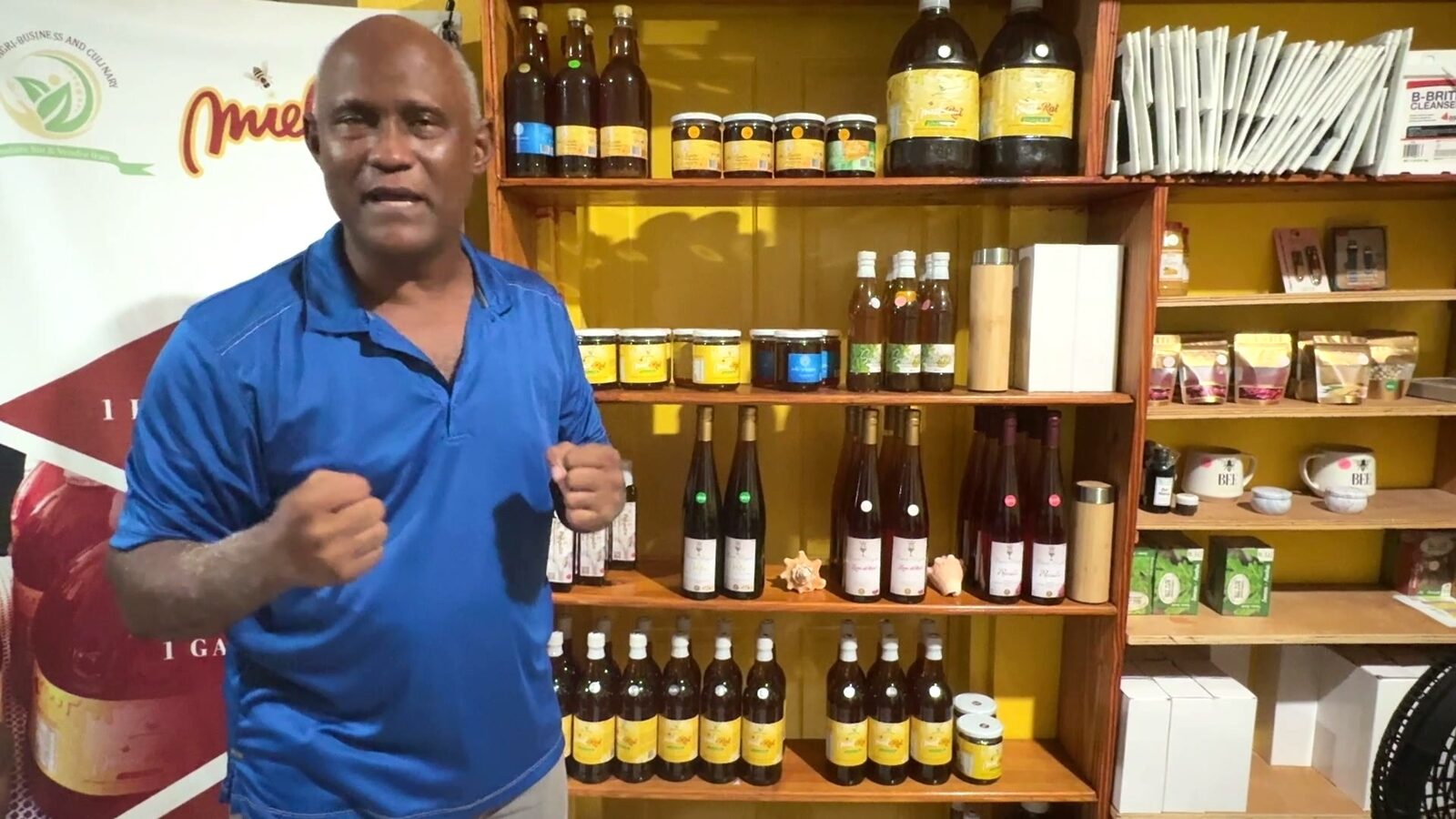
Ascencio Paul is an entrepreneur who started in beekeeping in 2017, with an initial investment of 50,000 US dollars. Through Les Villages Apicoles Horizons S.A. (ViAHSA), he chose the bee as the starting point of a broader vision: to produce quality honey (Miel du Roi, Christophia, Green Pasture Farms), a honey wine (Cuvée Royale), to train beekeepers (through the Centre de formation permanente en apiculture — CFPA), to make resources available to the beekeeping sector (through the Centre de concentration de ressources apicoles — CCRA), to create value, to strengthen rural communities and to show that nature can become an economic force when it is understood.
But Ascencio Paul’s story is not limited to the hive. It truly changes dimension when he understands that the future of beekeeping does not depend on bees alone: it also depends on plants.
A fast-growing market. According to Fortune Business Insights, the global market for plant-based medicines is expected to reach 347.5 billion US dollars by 2029, with a compound annual growth rate (CAGR) of 11.16% over the 2022-2029 period. The growing demand for plant-based ingredients in the cosmetics industry will drive the growth of this market.
A training that changes the way you see (2021)
In July 2021, to strengthen ViAHSA’s beekeeping vision, Ascencio Paul organized — with the expertise of the Jardin Botanique des Cayes (JBC) and of Éco-entrepreneur — a training for beekeepers on the importance of biodiversity and ecological restoration in beekeeping. The objective was clear: to help the actors of the sector better understand the conditions needed to develop a stronger, more sustainable, more resilient and more intelligent beekeeping.
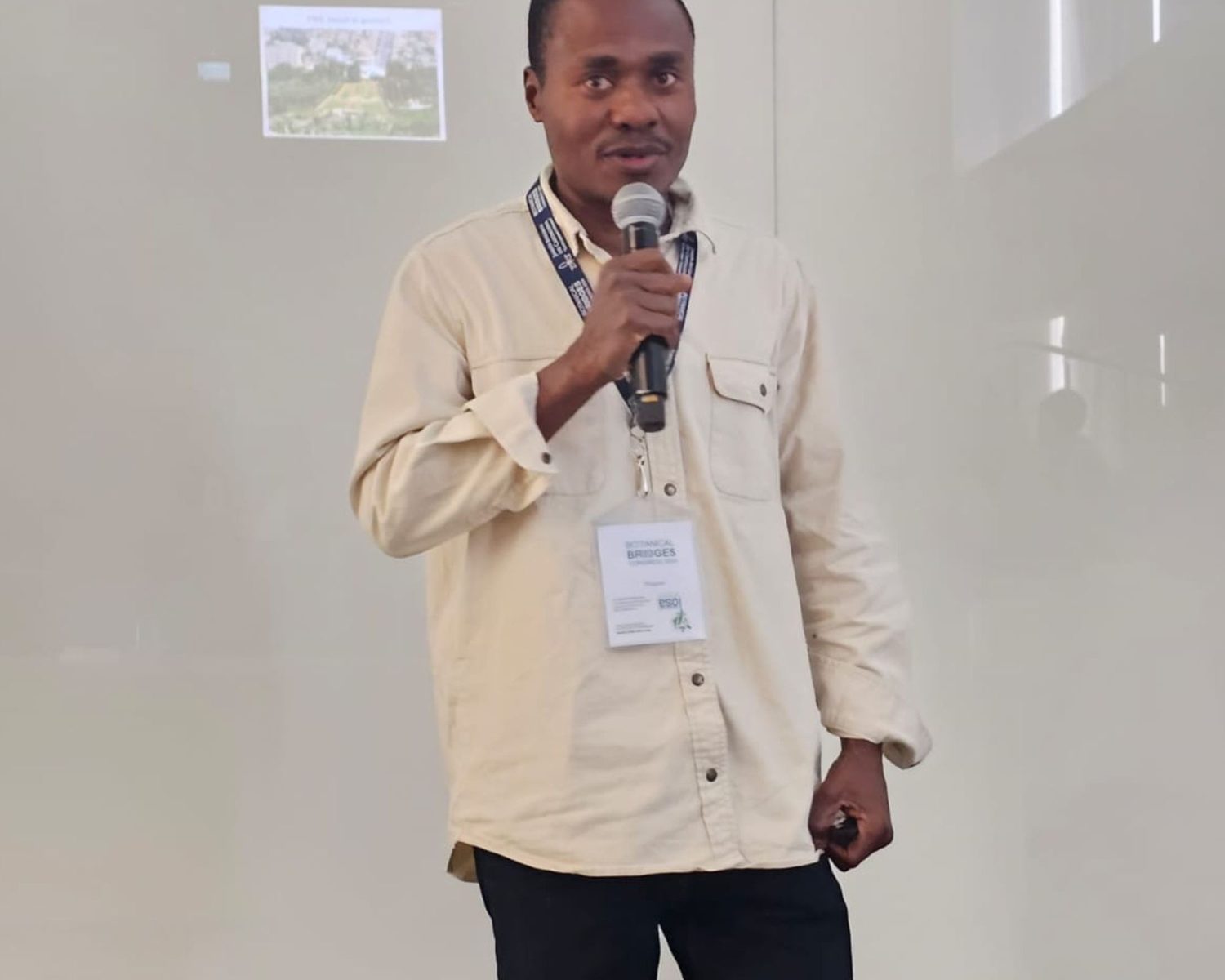
On this occasion, he invited William Cinéa, botanist-entrepreneur, to speak before the beekeepers on the importance of the environment in the development of beekeeping. This collaboration gave birth to the idea of the École intégrale de développement apicole (EIDA), the pillar of two academic projects to be developed with Haitian universities: the Chaire de Leadership en Enseignement (CLE) des Sciences apicoles haïtiennes and the Chaire de Leadership en Enseignement des Sciences botaniques haïtiennes.
That day, a simple idea was placed at the center of the discussion:
You cannot understand bees without understanding plants.
A hive is not merely a box where bees live. It is tied to a territory. It depends on trees, shrubs, grasses, vines, aromatic plants, seasonal flowers, nectar, pollen and the flowering calendar. It depends on the landscape’s capacity to feed the bees. Flowering plants (Angiosperms) appeared 130 to 140 million years ago, the social forms of Apidae about 87 million years ago, and the species Apis mellifera 9 to 6 million years ago, during the Miocene.
William Cinéa explains that bees do not visit all plants in the same way. Some provide nectar, others pollen. Some flower for a long time, others only for a short period. Some flowers are easily accessible to bees; others are not, because of their shape, their low nectar production or their rarity.
This explanation changes the way you see. It shows that beekeeping does not begin with the purchase of hives, but with reading the landscape and knowing the plants.
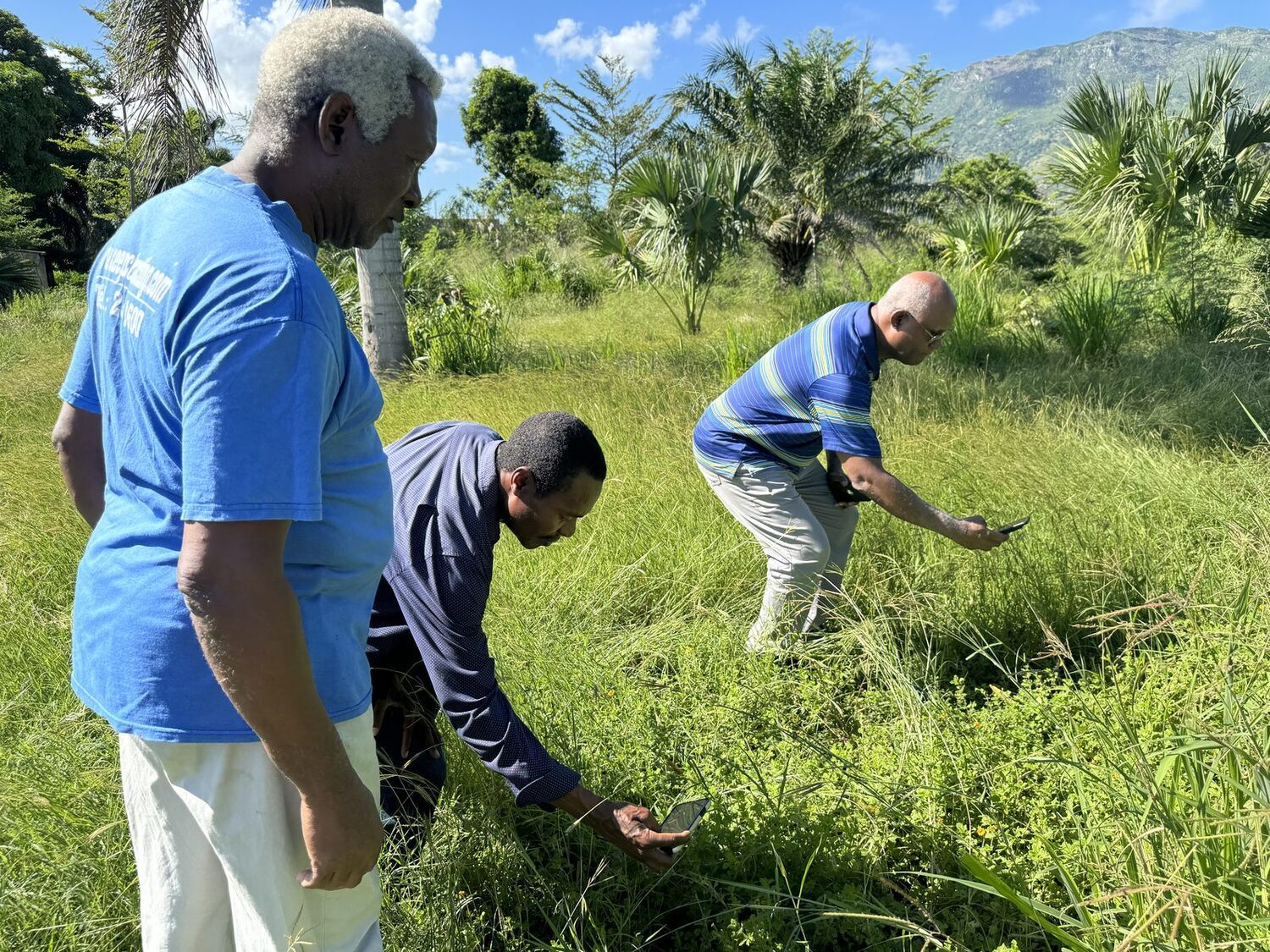
For Ascencio Paul, this training marks a turning point. He understands that the modern beekeeper must not only watch over his hives: he must also observe the plants around them. Know which species flower, at what period, for how long, which ones feed the bees, which ones are missing in the territory, and which ones could be planted or protected.
This understanding is essential. When bees do not find enough nectar, beekeepers are sometimes forced to feed them with honey set aside or with sugar. But sugar does not replace a landscape rich in honey plants: it helps temporarily, without building a sustainable beekeeping.
Sustainable and resilient beekeeping therefore demands more than hives. It demands data, observation, botanical knowledge, and it takes climate change into account. It demands understanding the seasons, the flowers, the vegetation layers, the nectar-producing plants, the pollen-producing plants and the real capacity of a territory to support the colonies.
This is where the strength of the Botapreneur appears.
From beekeeper to Plant Master
Ascencio Paul does not remain in production alone. He enters research, training, reading, observation and the understanding of the relationships between bees and plants. He understands that botany can give a new intelligence to Haitian beekeeping.
Alongside his training in Natural Beekeeping and Honey Wine Making, he followed in 2021, with the Jardin Botanique des Cayes, the program Plant Master — Botany for decision-makers: a set of online conferences on medicinal and aromatic plants and on reforestation, as well as online training on plant reproduction, biodiversity and ecosystem restoration, and the methodology of data collection for native and endemic species.
He takes part in training. He keeps reading. He looks for information on plants, bees, flowers and nectar resources. He is interested in botany not as a science remote from his trade, but as an integral part of the future of beekeeping and of his company.
This evolution is important: a beekeeper can become a botanical entrepreneur, or bota-entrepreneur; an entrepreneur can become an actor of science; and an economic sector can strengthen itself when it relies on the knowledge of the living world.
Ascencio Paul gradually masters the knowledge of plants and becomes a true Plant Master. He takes an active part in the founding of the Société Haïtienne de Botanique, where he holds the role of vice-president alongside William Cinéa, president of this society. He does not support botany from the outside: he enters the movement, takes part in the reflection, and makes the knowledge of plants a central part of his vision.
An anecdote sheds light on his state of mind. Ascencio Paul likes to say that, every six months, he changes profoundly. This does not mean that he abandons what he knew: it means that he keeps learning. Every reading brings an idea; every idea, a reflection; every reflection, an impulse; every impulse, a new energy. And this energy drives action.
That is exactly the Botapreneur spirit: never remaining frozen. Continuing to learn, to observe, to look for data, and to turn knowledge into concrete actions.
The bee, the starting point of a new economy
Through ViAHSA, this vision takes on a broader dimension. Beekeeping becomes more than an activity of honey production: a tool for training, local development, ecosystem restoration and value creation. A way of connecting bees, plants, communities and the economy.
Thus, Ascencio Paul regularly organizes training on beekeeping, sustainable agriculture and botany for his partners. For him, training is not a secondary activity: it is a strategy. To train is to pass on a vision, to help beekeepers better understand their environment, and to give communities the means to turn natural resources into opportunities.
In 2022, ViAHSA launched an advocacy effort for the beekeeping development of Haiti at the NAAHP Conference, held in Boston (Massachusetts, USA). There the company urged the Haitian diaspora to invest in projects that have an impact on their communities of origin and that would help curb the brain drain and the decapitalization of the rural world — like those families who sell their ancestral properties to finance the emigration of their members to other lands.
The advocacy also calls for building strategic partnerships with sector companies like ViAHSA, serious organizations and universities, in order to create new development ecosystems on the cluster model. This way of doing things could allow Haiti to recover its three lost sovereignties — ecological and environmental, food and nutritional, economic and financial — by relying on the abundant resources of its diaspora.
The story of ViAHSA shows that the bee can be the starting point of a new economy. An economy that does not destroy nature, but learns to work with it. An economy that does not see the plant only as a raw material, but as information, a resource and a possibility of innovation. It is no coincidence that ViAHSA’s motto is: “Reverdir et Enrichir Haïti grâce à l’abeille” (Greening and enriching Haiti through the bee).
Ascencio Paul’s example is important. Botany is not reserved for researchers, universities or laboratories. It can help a beekeeper produce better, a company plan better, a community better value its territory, and young people imagine new professions.
To become a Botapreneur is not merely to create a business around plants. It is to change the way you see. It is to learn to see in every plant a possibility. It is to understand that biodiversity can become a source of innovation, health, economy, education and sustainable development.
The world needs more Botapreneurs
Ascencio Paul’s journey reminds us of a simple truth: the future of beekeeping is not found in the hives alone. It is also found in the plants, in knowledge, in data, and in the capacity to observe, to learn and to turn this knowledge into action.
Thus, every plant on ViAHSA’s apiary farm is an occasion for creation for him. With the quenepa, he creates a honey wine (mead) and a rum (Graine de Miel, a translation of the scientific name Melicoccus bijugatus); the mombin plum yields the mead Hydro X Ci; vetiver roots are used to make the rum Face au Mur; moringa goes into the composition of Movigor; broad-leaf thyme is the conductor of Tchelele; roselle (or hibiscus) is used to make six products: roselle powder, roselle juice, Boule Pique rum, Propolis +, Lune de Miel and Vin de Roselle. He uses 13 aromatics for his flavored honeys of the Green Pasture Farms range and makes three natural medicines based on propolis, spices, moringa and calabash.
That is why Ascencio Paul can be presented as a Botapreneur. He connects the bee to the plant, the plant to science, science to entrepreneurship, and entrepreneurship to local development.
And this is also the message that Botapreneurs wants to bring to the world: learning to know plants in order to create, innovate, restore, produce and build new forms of wealth.
The world needs more Botapreneurs. People able to look at a flower and see in it more than a flower. People able to look at a bee and see in it more than an insect. People able to look at a territory and see in it a future. Ascencio Paul shows that this vision is possible.