By William Cinéa — Founder of Botapreneurs and creator of the Plant Mastery program.
For a long time, I carried a deep conviction: plants are at the heart of everything. Health, food, conservation, culture, ecological restoration, medicine, gardens, the future of communities. This conviction was born in the field. It was born of walking among plants, of observing landscapes, of working with communities, of building a botanic garden, and of discovering all that hidden knowledge in leaves, roots, flowers, fruits, forests and local traditions.
That is why a large part of my work naturally began with botany. I spoke of plants, of botanical families, of ecosystems, of medicinal uses, of ethnobotany, of conservation, of plant data and of botanic gardens. I wanted people to understand that plants are not mere decoration. They are living systems. They are resources for life, health, resilience, identity and development.
But over time, I understood something else: botanical knowledge, on its own, is not enough.
If knowledge does not circulate, it remains invisible. If a garden cannot raise funds, it cannot maintain its collections. If a botanist cannot explain the value of their expertise, institutions may ignore them. And if a plant expert does not know how to design an offer, a service, a program or a system, their knowledge risks staying locked inside their mind, in reports, or in academic spaces that too few people reach.
That is why Botapreneurs cannot limit itself to botany. The project must also speak of entrepreneurship.
The missing half of botanical impact
Many scientists and plant experts are trained to know. They learn to observe, identify, classify, collect, document, analyze and explain. These are essential skills. Without them, no serious botanical work is possible. You can neither conserve species, nor create botanical databases, nor develop living collections, nor train the next generation with credibility.
But knowledge is only one side of the equation.
The other side is the ability to turn that knowledge into value. That value can take many forms: a course, a consulting service, a botanic garden, a public program, a plant database, a natural product, a conservation initiative, training for universities, a service for NGOs, or a business that helps communities and institutions work better with plants.
This second side demands another language. It demands the language of entrepreneurship: marketing, sales, pricing, operations, fundraising, strategy, leadership, human resources, technology, data, communication and execution.
For many scientists, these words seem far removed from the purity of knowledge. But in the real world, they are not optional. They are the bridge between knowledge and impact.
A botanist who understands plants but ignores how institutions work will struggle to build something lasting. A garden founder who masters collections but not fundraising may lose their garden. An educator who understands ecology but not marketing risks never reaching those who need their knowledge. A researcher who holds important data but has no communication system may remain unheard.
That is why Botapreneurs must teach both sides.
What Cornell made me see differently
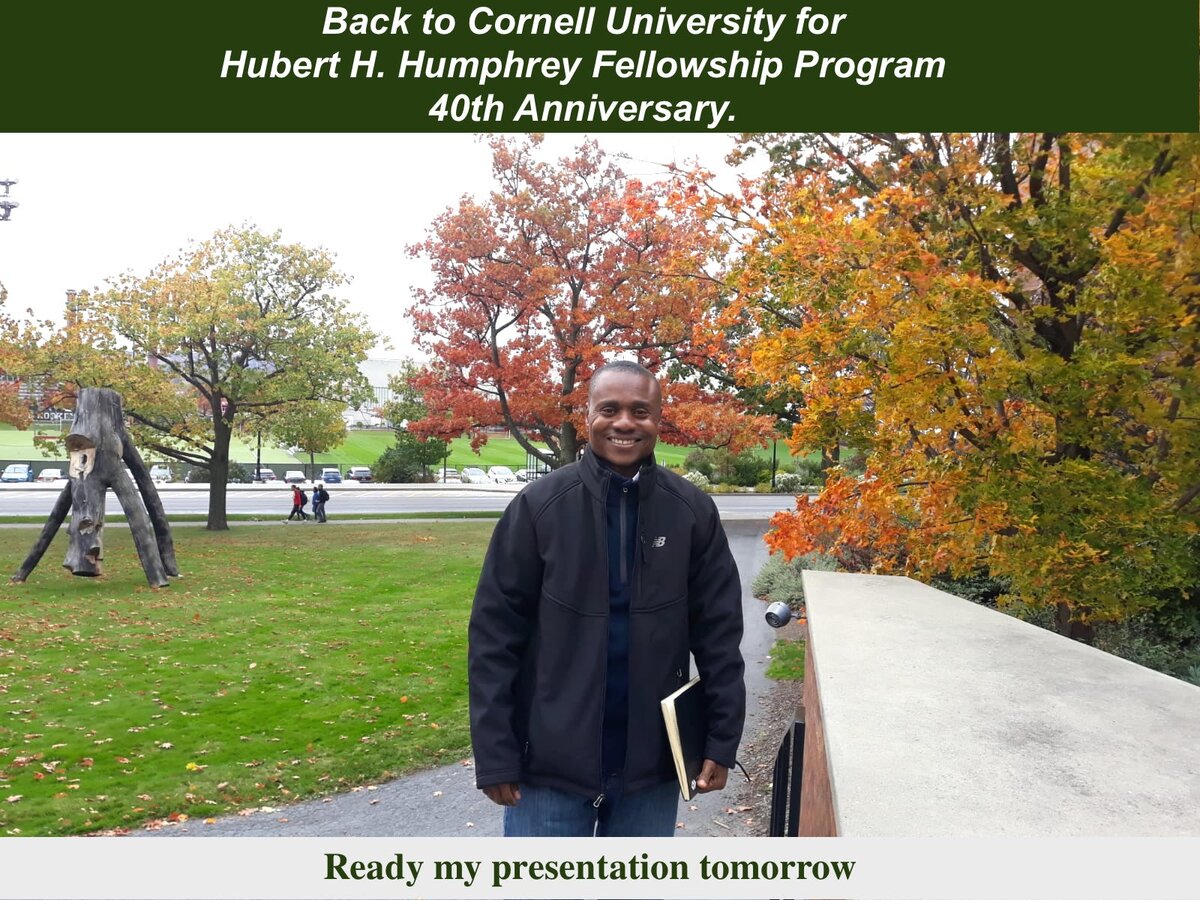
When I returned to Cornell in 2024 to pursue the Master of Professional Studies devoted to botanic garden leadership, I encountered entrepreneurship in a new light. I had already launched projects years before. I had worked with ideas, with projects, with institutions, and faced the concrete reality of building from almost nothing. But much of my past experience had been carried by technical knowledge, urgency, passion and necessity.
At Cornell, I began to see entrepreneurship as a larger system.
It was not only about creating a business. It was about understanding how value is created, how institutions survive, how leaders mobilize resources, how ideas are positioned, how you persuade, how money circulates, how organizations grow, and how strategy guides action.
This changed the way I looked at botanical work.
A botanic garden, for example, may appear to the public as a peaceful place, filled with trees, flowers, paths, labels, collections and beauty. But behind that beauty lies a complex institution. There are budgets, donors, boards of directors, staff, visitors, educational programs, membership systems, fundraising campaigns, public relations, partnerships, communication strategies, plant records, maintenance systems and long-term planning.
The public sees the garden. The leader sees the system.
This distinction is essential.
A botanic garden is botanical in its mission, but entrepreneurial in its survival. It is built around plants, but it stands upright thanks to relationships, money, trust, communication, management and strategy.
The lesson of botanic garden leadership
I remember a moment when leaders of large botanic gardens were discussing how they build and sustain their institutions. Some of these gardens operate with budgets that reach several million dollars a year. From the outside, one might think their work is mostly about plants, science and public education. Yet one of the most important lessons I heard is that a large part of institutional leadership consists of raising funds, weaving relationships, shaking hands, communicating the mission, and maintaining the engagement of the public, the donors and the partners.
That lesson never left me.
It reminded me that a botanical institution does not survive because its mission is noble. It must be supported by a structure capable of attracting resources. It must explain why it matters. It must inspire attachment. It must translate plant knowledge into public value.
This is where many plant-related initiatives fail. They assume that, because plants are important, people will naturally support the work. But importance alone does not create sustainability. A mission must be organized. A message must be clear. A service must be designed. A community must be built. An economic model must exist.
In other words, a botanical project needs entrepreneurship.
Why marketing does not betray the mission
One of the greatest mistakes made by experts is to believe that marketing is something superficial. They see it as promotion, advertising, noise. But true marketing is much deeper.
Marketing is the discipline of understanding people.
It asks questions: whom do we serve? What problem do they face? What language do they use? What do they fear? What do they desire? Why does this knowledge matter to them? Why should they pay attention? Why should they trust us? What transformation can we offer them?
If a botanist cannot answer these questions, their knowledge risks staying cut off from those who need it.
For Botapreneurs, marketing is not about manipulating people. It is about translating botanical value into human relevance. It is helping a university understand why Plant Mastery matters. It is helping an NGO understand how a consulting botanist can improve its projects. It is helping a government understand why plant databases are strategic. It is helping an entrepreneur understand why a botanic garden or a plant collection can become an institution of the future.
Marketing is not separate from the mission. Marketing is how the mission finds its audience.
Sales as a form of service
The same is true of sales. Many scientists and experts are uncomfortable with the idea of selling. They feel that selling lowers the dignity of their knowledge. But ethical selling is not manipulation. To sell ethically is to help someone make a decision.
When a botanist offers a service to an institution, they are not simply asking for money. They are saying: I understand a problem you have. You work with plants, but you may not have the expertise to identify them, document them, understand their ecology, assess their risks, organize their data or turn them into programs. I can help you solve this problem.
That is service.
If Botapreneurs wants to help universities, NGOs, governments, gardens, businesses and communities, then it must learn to present its offers with clarity. It must lay out the problem, the solution, the process, the result and the value. That is the work of sales.
Without sales, many good ideas die in silence.
Data, operations and the discipline of execution
Entrepreneurship is also discipline. It is not only inspiration. It is not only vision. It is not only waking up with a powerful idea about plants and the future.
A serious business needs operations.
It needs a base of contacts. A list of ideal clients. Tracking systems. Mailing lists. Proposals. Files organized by version. A calendar. Content planning. A way of knowing which service is being promoted, which client has been contacted, which proposal has been sent, which article has been published, and which opportunity to pursue next.
This is especially crucial for anyone working at the intersection of science, education and entrepreneurship. Ideas are many. Opportunities are many. Documents multiply quickly. Without a system, energy dissipates. Motivation declines, not because the mission is weak, but because the structure is.
Plants teach us that structure matters.
A plant grows because it has roots, stems, tissues, flows and organization. A business, too, needs a structure. Without structure, growth becomes confusion.
Strategy is not activity
Another lesson entrepreneurs must learn: the difference between strategy and tactics.
Posting on social media is a tactic. Writing an article is a tactic. Sending an email is a tactic. Creating a course is a tactic. Calling a university is a tactic.
Strategy is deeper.
Strategy asks where all these actions lead. It defines the audience, the positioning, the offer, the economic model, the relationship between services and the long-term direction.
For Botapreneurs, strategy is not simply to talk about plants. Strategy is to build a platform where plant knowledge becomes education, consulting, data, gardens, content, leadership and entrepreneurial opportunities.
Plant Mastery teaches people to understand plants. The Botanist-Entrepreneur Program helps them turn that knowledge into services and impact. The Consulting Botanist gives institutions access to botanical expertise. Plant Data — botanical data in the service of decision-making — helps countries and organizations use plant information strategically. Botanic Gardens help communities and institutions create living centers of education, conservation and data. The Conferences help spread the vision.
These services are not separate ideas. They are part of the same ecosystem.
That is strategy.
The Botapreneur, a systems thinker
A botanist understands ecosystems. An entrepreneur understands markets. A Botapreneur must understand both.
In nature, nothing exists alone. A plant is linked to the soil, the water, the fungi, the insects, the birds, the climate, the light, the microorganisms and human uses. A change in one part of the system can affect the whole.
Business works in a similar way. An offer is linked to a client. A client is linked to a problem. A problem is linked to a message. A message is linked to a channel. A channel is linked to trust. Trust is linked to the sale. The sale is linked to delivery. Delivery is linked to reputation. Reputation is linked to growth.
The Botapreneur sees these connections.
That is why the alliance of botany and entrepreneurship is so powerful. Botany trains the mind to observe living systems. Entrepreneurship trains the mind to create value within human systems. When the two come together, the result is not only a business. It is a new way of thinking about plants, society and development.
Not everyone is meant to become an entrepreneur
It must be said clearly: not every Plant Master is meant to become a Botapreneur.
Some will want to devote themselves to plant knowledge, to conservation, to education, to research or to field observation. That is precious. A society needs Plant Masters able to identify plants, document flora, teach children, support gardens and help communities understand their ecosystems.
But some Plant Masters will feel called to go further. They will want to create courses, services, products, collections, businesses, gardens, databases or institutions. They will want to use plant knowledge not only to understand the world, but to build something in it.
These are the ones Botapreneurs must prepare.
They need to learn the language of plants and the language of business. They need to understand both the leaf and the market, the ecosystem and the client, the collection and the economic model, the mission and the mechanism that makes it sustainable.
Why this matters today
We live in a moment when the world is changing fast. Technology is transforming how people learn, buy, communicate and decide. Artificial intelligence is transforming the production and diffusion of knowledge. Social media is transforming visibility. The great global challenges are transforming the demand for solutions in food, health, climate, biodiversity and education.
In this context, plant knowledge cannot remain passive.
The world needs people who understand plants and know how to act with that knowledge. It needs people able to help governments decide better, universities teach differently, NGOs restore ecosystems, businesses understand the plants they use, communities value their flora, and young people see the opportunities of the living world.
Botapreneurs exists for this reason.
It is not only a platform for plant lovers. It is not only a place for botanical education. It is a platform for a new kind of leadership: one that connects plant mastery with entrepreneurship, data, institutions and impact.
Conclusion: the future belongs to those who connect knowledge and action
The future of botany will not be secured by people who merely know plants. It will be secured by those who know how to make plant knowledge useful, visible, organized, funded, taught, protected and turned into solutions.
This requires an entrepreneurial dimension.
It requires marketing, sales, strategy, operations, data, technology, leadership and courage. It requires the humility to keep learning and the discipline to build systems.
The botanist sees the plant. The entrepreneur sees the opportunity. The Botapreneur sees the system that connects the two.
That is the work ahead of us.
Botapreneurs must teach plants, but also the way plant knowledge circulates in the world: how it becomes trust, how it becomes revenue, how it becomes institution, how it becomes conservation, how it becomes education, and how it becomes a future.
Because a mission without a system is fragile.
But a mission supported by knowledge, strategy, business and leadership can grow like a living forest.
About the author — William Cinéa is a botanist-entrepreneur, holder of a master’s degree in botanic garden leadership and a certified nature interpreter. He is the founder of Botapreneurs and the creator of the Plant Mastery program. He works to democratize botanical knowledge and put it at the service of health, food, agriculture, conservation, education, innovation, well-being and entrepreneurial botany.