By William Cinéa — Founder of Botapreneurs and creator of the Plant Mastery program.
Botany should not be only a science of books, definitions and difficult terms. It must become again a living science, rooted in the plants that students see, touch, photograph, compare and use in their own environment.
For a long time, universities have taught botany as a fundamental science. They have trained students to recognize the organs of plants, to understand botanical families, to use scientific terms, to study flowers, leaves, fruits, seeds, roots, tissues and sometimes microscopic structures.
This training has been important. It has made it possible to build a scientific foundation, to create floras, to develop herbaria, to train taxonomists, to support agriculture, pharmacy, ecology and conservation.
But there is also a problem.
In many cases, botany has been taught in too abstract a way. Students learn words, definitions and examples drawn from books, but they do not recognize the plants that grow around them. They may learn the structure of a flower without knowing the flowers of their neighborhood. They may learn botanical families without being able to identify ten species of their own region. They may memorize terms, but remain disconnected from the local flora.
Yet botany is a science of the living. The plants are there. They grow in yards, gardens, streets, fields, mountains, wetlands, forests, ravines, markets and communities.
A botany that does not begin with the plants near the student risks becoming a distant science.
The problem of a botany that is too generic
A botany course can give useful knowledge, but remain too generic. We talk about leaves, flowers, fruits, stems, families, tissues, adaptations and life cycles. But often, the examples come from elsewhere.
The student learns plants they will never see. They memorize structures they do not connect to their environment. They study examples coming from other countries, other climates, other ecosystems. They sometimes pass the exam, but do not necessarily develop a real relationship with the plants of their community.
This model creates a rupture between knowledge and experience.
Yet learning botany should help a person better understand the territory where they live. A student in Haiti should learn to recognize the plants of Haiti. A student in Florida should learn to recognize the plants of Florida. A student in Africa, in Latin America, in the Caribbean, in Europe or in Asia should begin with the plants that surround them.
Botany becomes stronger when it begins with the local flora.
The Plant Mastery method: begin with the plants around us
In the Plant Mastery vision, a Plant Master is first of all a person who decides to study the plants around them.
They do not begin only with definitions. They begin with observation.
They look at the plants of their yard, their neighborhood, their school, their community, their farm, their garden, their mountain, their forest or their urban landscape. They learn to photograph them, to compare them, to classify them, to name them, to understand their families, their uses, their risks, their habitats and their relationships with humans and ecosystems.
A Plant Master does not settle for saying: “I love plants.” They learn to observe and understand plants.
To decode a plant is to observe its leaves, its flowers, its fruits, its seeds, its habit, its smell, its texture, its latex, its habitat, its botanical family, its interactions, its uses, its dangers and its value for the community.
That is why Plant Mastery courses must begin with the local flora of each learner.
Learning botanical families with local examples
Take the example of the Rubiaceae family.
In a classic course, the student may learn that the Rubiaceae are often characterized by opposite leaves, interpetiolar stipules, often regular flowers and varied fruits. They can memorize these terms and move on to another chapter.
But in a Plant Mastery method, that is not enough.
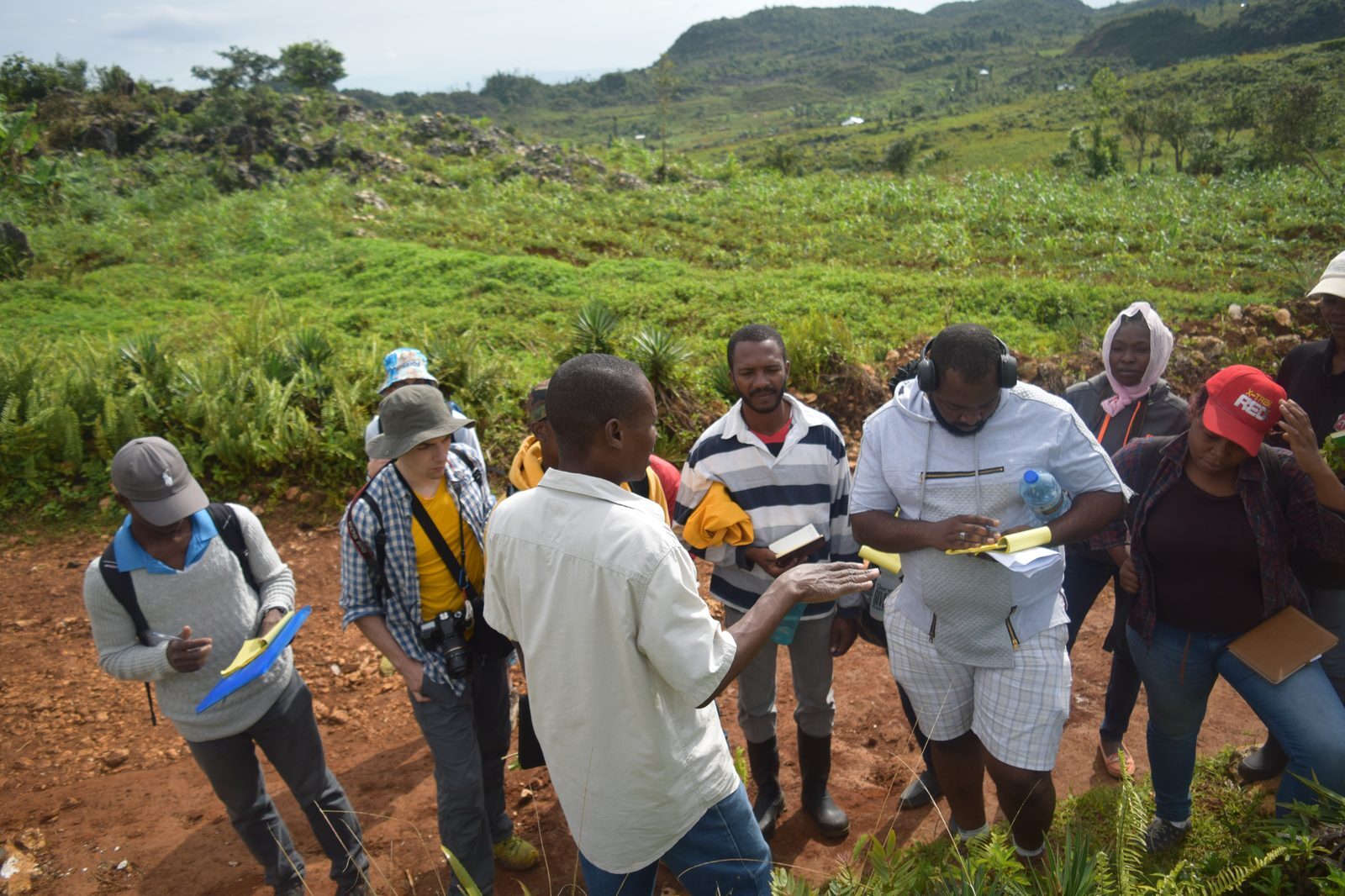
The student must go into the field. They must look for Rubiaceae around them. They must photograph the opposite leaves. They must observe the stipules. They must compare the flowers. They must see the fruits. They must learn to recognize patterns.
An assignment could be: find and photograph ten plants of the Rubiaceae family in your environment. For each plant, indicate the place, the habitat, the visible characters, the known uses, the possible risks and the questions you have.
This type of assignment transforms botany.
The student no longer merely memorizes a family. They encounter it.
They begin to understand that botanical families are not only categories in a book. They are patterns visible in nature. They are keys to understanding plant diversity, uses, molecules, ecological relationships and possibilities for innovation.
Assignments must become field missions
In a new way of teaching botany, assignments should not be only written answers. They must become field missions.
For example: identify ten native plants of your community; photograph five medicinal plants used locally, with caution and without making medical recommendations; find ten food or edible plants of your environment; compare five ornamental plants and their ecological value; identify three invasive plants in your area; observe the plants that attract bees and other pollinators; create a small map of the important plants of your neighborhood; document a plant with its local name, its scientific name, its family, its habitat and its uses; observe a plant over several weeks and note its changes; make a photographic collection of a botanical family.
These exercises allow students to become actors in their own learning.
They do not merely receive botany. They build it.
Technology can help, but it must not replace observation
Today, technology can support botanical learning. Phones make it possible to photograph plants. Digital platforms make it possible to share observations. Databases help verify scientific names. Artificial intelligence can sometimes propose leads for identification.
But technology must not replace observation.
An app can propose a name, but the student must learn to verify. An artificial intelligence can give an answer, but the Plant Master must learn to observe the characters. A photo can help, but it does not replace the field. A database can inform, but it does not replace the relationship with the plant.
Technology must be a tool. Nature must remain the main classroom.
From abstract botany to practical botany
Botany has sometimes been taught from very technical characteristics, sometimes microscopic, sometimes difficult to connect to everyday experience. This knowledge is important, but it must be connected to reality.
A student should be able to understand at once the visible morphology, the botanical families, the taxonomy, the local uses, the habitats, the risks, plant chemistry, ecological relationships, adaptations, data, collections, herbaria, and the possibilities for conservation and innovation.
Practical botany does not reject science. It makes science visible.
It allows the student to understand why an opposite leaf can be important, why a botanical family can help identify a plant, why a native plant can be essential to an ecosystem, why an exotic species can become invasive, why a medicinal plant must be used with caution, why a local collection can become a database for the future.
To know your flora is to know your wealth
Every community possesses a plant wealth.
There are trees that give shade. Plants that nourish. Plants that heal traditionally. Plants that attract bees. Plants that protect soils. Plants that stabilize riverbanks. Plants that perfume. Plants that color. Plants that tell a story. Plants that resist drought. Plants that indicate the state of an environment. Rare or threatened plants. Plants the elders know, but that the young no longer recognize.
When a community no longer knows its plants, it loses a part of its memory.
To train Plant Masters is to help communities recover this plant memory.
A Plant Master can become a link between generations. They can listen to the elders, document local names, verify identifications, understand uses, respect traditional knowledge, add scientific rigor and create a useful knowledge base for the young.
Botany as a tool of education and development
A botany rooted in the local flora can transform education.
In a school, it can turn the yard into a living laboratory. In a university, it can turn assignments into useful inventories. In a community, it can create a local memory of plants. In a city, it can guide landscaping. On a farm, it can value food and honey plants. In a botanic garden, it can structure educational collections. In a business, it can inspire more responsible products and services. In a restoration program, it can help choose the right species.
Botany is therefore not only a school subject. It can become a tool of local development.
A proposal for universities
Universities must rethink the teaching of botany.
It is no longer enough to teach only terms, chapters and definitions. Botany must be taught as a science of the field, of relationship, of data and of mission.
A modern botany course should include regular field outings, local photographic collections, observations of botanical families, assignments on native plants, inventories of useful plants, mini-herbaria, community biodiversity maps, comparisons between local species and exotic species, discussions about medicinal plants with caution, analyses of food, ornamental, ecological and economic uses, and links with botanic gardens, herbaria and databases.
The goal is not only to train students who know terms. The goal is to train people able to understand the plants around them.
Plant Mastery: learning to observe and understand the local flora
The Plant Mastery program is built on this conviction: to understand botany, you must begin with what you see.
Every learner must become able to observe, photograph, identify, compare, document and interpret the plants of their own environment.
The local flora becomes the first book. The field becomes the first laboratory. The community becomes a source of knowledge. Technology becomes a tool of documentation. Botany becomes a living practice.
This is how you train Plant Masters: people able to recognize plants, to understand families, to connect uses to risks, to decipher patterns, to create collections, to document their territory, and to turn plant knowledge into education, conservation, innovation and development.
Conclusion: botany must return to the field
Botany must not remain locked in books.
Books are important. Terms are important. Herbaria are important. Microscopes are important. Databases are important. But all of this must return to the living.
A botany that does not touch the field becomes abstract. A botany that does not know the local flora becomes distant. A botany that does not train the eye becomes fragile. A botany that does not connect plants to communities loses its mission.
The world needs a new way of teaching botany. A local botany. A practical botany. A photographed botany. An observed botany. A documented botany. A botany connected to families, uses, risks, habitats and ecosystems. A botany able to train Plant Masters.
Because before understanding the plants of the world, you must learn to understand the plants that grow around us.
And when a person learns to observe their local flora, they begin to observe nature itself.
About the author — William Cinéa is a botanist-entrepreneur, holder of a master’s degree in botanic garden leadership and a certified nature interpreter. He is the founder of Botapreneurs and the creator of the Plant Mastery program. He works to democratize botanical knowledge and make it useful to health, food, agriculture, conservation, education, innovation, well-being and plant-based entrepreneurship.