
By William Cinéa — Founder of Botapreneurs and creator of the Plant Mastery program.

To understand plants is not only to learn their names. It is to understand a story that began hundreds of millions of years ago. A story of adaptation, resistance, reproduction, partnership, competition and biological innovation.

The plants we see today in gardens, forests, fields, savannas, mangroves, mountains or dry zones did not appear all at once. They are the result of a long evolution. Every root, every stem, every leaf, every spore, every seed, every cone, every flower and every fruit represents a response to a challenge encountered by plant life over the course of time.

For a plant enthusiast, a Plant Master or a Botapreneur, knowing this story is fundamental. You cannot truly understand a plant if you do not understand why it possesses certain structures, why it grows in a particular environment, why it reproduces in a certain way, why it produces molecules or why it develops relationships with insects, fungi, bacteria, birds, animals and humans.

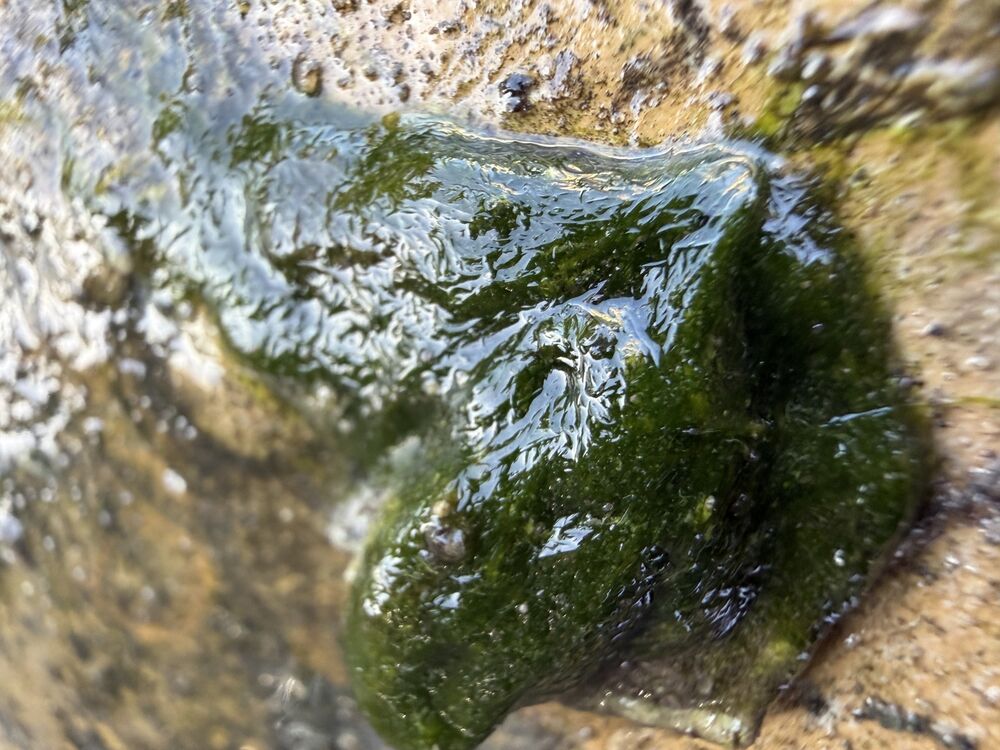
Illustrated timeline: green algae, bryophytes, pteridophytes, gymnosperms, angiosperms along a time line
The great stages of plant evolution, from the aquatic life of green algae to flowering plants.

A simplified chronology of plant evolution

The following dates are approximate, because scientific discoveries evolve with fossils, genetics and new methods of analysis.

Approximate periodGreat stageImportance
More than 1 billion yearsAncient diversification of algae and photosynthetic organismsPhotosynthesis prepares the foundations of plant life
About 500 to 475 million yearsFirst land plantsPlants begin to leave the water and colonize the continents
About 450 to 420 million yearsFirst vascular plantsAppearance of conducting tissues able to transport water and nutrients
About 420 to 360 million yearsExpansion of ferns, horsetails, lycophytes and ancient forestsPlants become larger and transform the landscapes
About 365 to 350 million yearsAppearance of the first seed plantsThe seed protects the embryo and allows better adaptation to terrestrial environments
About 320 to 300 million yearsDiversification of gymnospermsConifers, cycads, ginkgo and related groups develop
About 140 to 125 million yearsAppearance and diversification of angiospermsFlowering and fruiting plants transform relationships with insects and animals
TodayDominance of angiospermsFlowering plants make up the majority of the plants used by humans

From water to land: a biological revolution

Before land plants, photosynthetic life was mostly linked to water. Algae played a very important role in this story. Today, scientists consider that land plants descend from a lineage of green plants close to green algae, in particular charophytes or streptophytes.

Leaving the water was one of the great challenges of plant evolution.

In water, an organism is supported by its environment. It does not dry out easily. The cells are surrounded by water. Reproduction is simpler when gametes can move in a moist environment. But on dry land, everything becomes more difficult. You must resist drought, protect yourself from the sun, stand upright against gravity, capture water in the soil, transport that water to the aerial parts and reproduce without depending entirely on free water.

The conquest of land was therefore not a simple displacement. It was a profound transformation of the plant body. The first land plants had to develop innovations: a cuticle to limit water loss, resistant spores, protected reproductive structures, then later vascular tissues, roots, leaves, seeds, pollen, flowers and fruits.

The bryophytes: small plants, a great lesson in adaptation

The bryophytes include mosses, liverworts and hornworts. They are among the simplest land plants in their organization. They do not possess true vascular tissues comparable to those of ferns, conifers or flowering plants. They often remain small and very dependent on moisture.

But the bryophytes are not plants without importance. On the contrary, they show how plant life began to settle on dry land. They are found on rocks, trunks, moist soils, walls, forests, mountains and sometimes in difficult conditions. They can retain water, take part in the formation of soils, protect microhabitats and prepare spaces for other forms of life.

Moss (bryophyte) on the bark of a tree
A moss, a true bryophyte: a green carpet of small leafy stems, without true vessels or roots. Not to be confused with lichens, which are symbioses of fungus + alga and not plants.

Horsetails are not bryophytes. They belong to the vascular plants without seeds, like ferns and lycophytes. This distinction is important to properly understand the evolution of plants.

The bryophytes give us a first lesson: the conquest of land began with modest organisms, but ones able to open the way to more complex ecosystems.

Vascular plants: the invention of internal transport

One of the great revolutions of plant evolution is the appearance of vascular tissues. These tissues make it possible to transport water, minerals and sugars within the body of the plant. The xylem mainly transports the water and minerals absorbed by the roots. The phloem transports the sugars produced by photosynthesis toward the different parts of the plant.

This innovation allowed plants to become larger, more structured and more able to occupy dry land. With vascular plants appear true roots, true stems and true leaves. Plants can better capture water in the soil, better stand upright, better expose their leaves to the light and better colonize different environments.

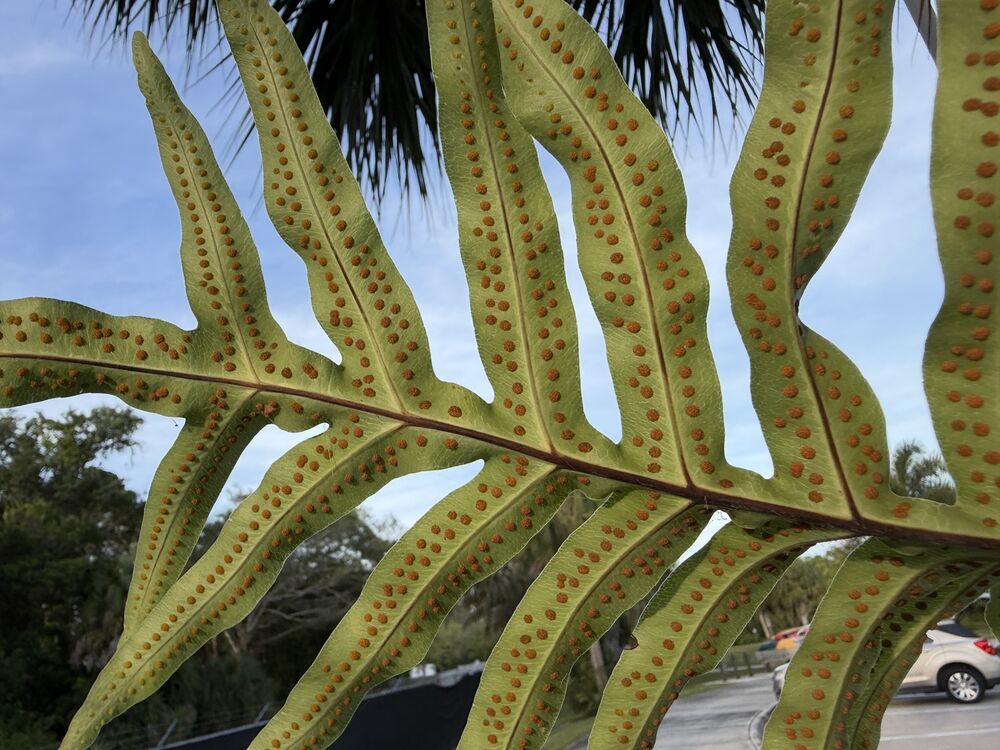
Ferns, horsetails and lycophytes belong to this story. They do not produce flowers or seeds. They reproduce by spores. In many ferns, the spores are produced in structures called sori, often visible on the underside of the fronds. That is why they were long called cryptogams, that is, plants whose reproductive structures are less visible than those of flowering plants.

Ferns remind us that plants dominated the Earth long before the appearance of flowers. They also show that reproduction by spores was a major strategy before the great revolution of the seed.

The seed: protecting the future of the plant

The appearance of the seed was a decisive stage. A seed contains an embryo, nutritive reserves and a protection. It allows the plant to resist difficult conditions, to wait for the right moment to germinate and to colonize new environments.

With the seed, plants become less dependent on free water for reproduction. Pollen allows the transport of the male gametophyte. The ovule protects the female part. After fertilization, the embryo can be protected within a seed.

This innovation gave birth to the seed plants, or spermatophytes. The spermatophytes include two great groups: the gymnosperms and the angiosperms.

The gymnosperms: the plants with naked seeds

The gymnosperms are seed plants, but their seeds are not enclosed in a fruit. The word gymnosperm means “naked seed.” This means that the ovule is not enclosed in an ovary as in flowering plants.

The gymnosperms do not have true flowers in the botanical sense of the angiosperms. They often produce cones or other reproductive structures. Among them are the conifers, the cycads, the zamias, the ginkgo and the gnetophytes.

Pines, cypresses, firs, sequoias, cycads and zamias belong to this great story. Many gymnosperms are adapted to difficult environments: cold, poor soils, seasonal drought, mountains or temperate and boreal climates. The sequoias show how far plants can go in size, longevity and the building of biomass. The pines show the importance of cones, pollen and naked seeds. The cycads and zamias recall very ancient lineages, still present in tropical and subtropical landscapes.

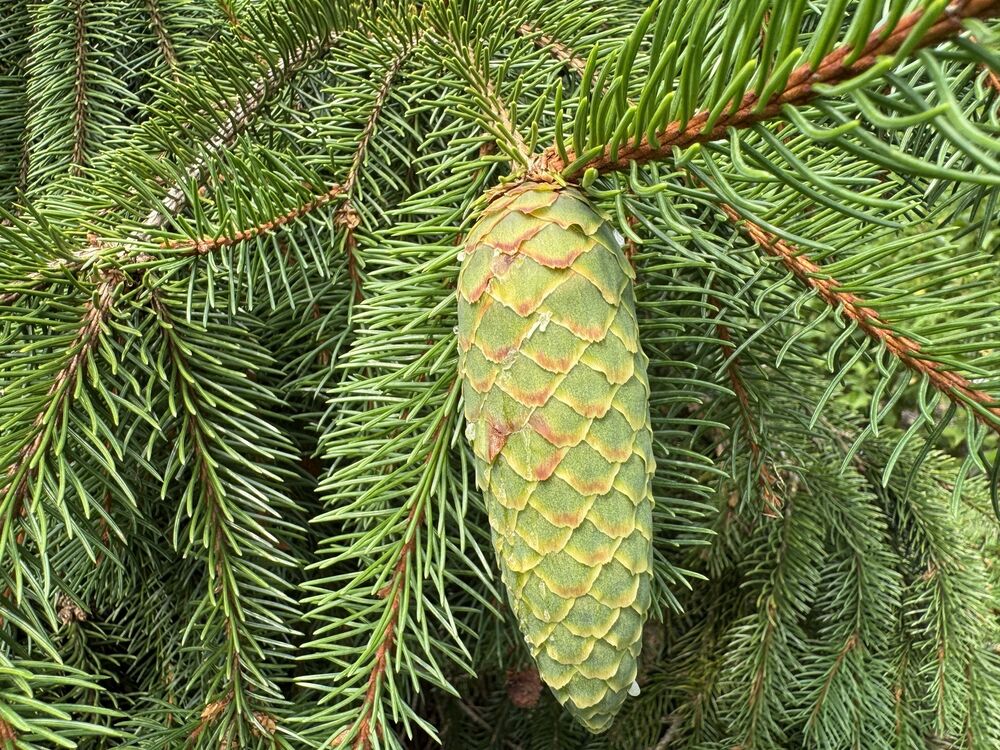
Pine cones on a branch
The cones of a pine (gymnosperm): the seeds are borne "naked" on the scales, without being enclosed in a fruit.

The gymnosperms teach us a second great lesson: the seed gave plants a new power to protect their offspring and conquer more varied environments.

The angiosperms: flowers, fruits and an explosion of diversity

The angiosperms are the flowering plants. They represent today the most diversified group of land plants. Their great innovation is the flower, associated with the fruit.

In angiosperms, the ovule is enclosed in an ovary. After fertilization, the ovary generally becomes a fruit. This fruit protects the seeds and helps their dispersal. It can be fleshy, dry, winged, hard, floating, explosive or attractive to animals.

The appearance of flowers transformed the planet. The colors, the smells, the nectar, the shapes and the floral structures created new relationships with insects, birds, bats and other pollinators. Fruits created new relationships with seed-dispersing animals. Plants and animals began to evolve together in increasingly complex interactions.

Red hibiscus flower
The flower, the great innovation of angiosperms: colors, fragrances and nectar sealed an alliance with pollinators.

That is why the angiosperms experienced an extraordinary diversification, especially from the Cretaceous onward. They include today the majority of the plants we use: cereals, fruits, vegetables, legumes, medicinal plants, aromatic plants, tropical trees, ornamental plants, grasses, orchids, palms and many forest species.

Graph: number of described species by major group of plants
Current diversity is very uneven: the angiosperms alone represent nearly nine plant species out of ten.

Charles Darwin had been struck by the rapid appearance of flowering plants in the fossil record. He spoke of an “abominable mystery,” because the angiosperms seemed to appear and diversify very quickly on the geological scale. Today, fossils, phylogeny and molecular data make it possible to better understand this story, even if some questions remain open.

Monocotyledons and eudicotyledons: two great patterns among flowering plants

The angiosperms include several great groups. In classic teaching, we often speak of monocotyledons and dicotyledons. Today, we use more precisely the term eudicotyledons for a large part of the former dicotyledons.

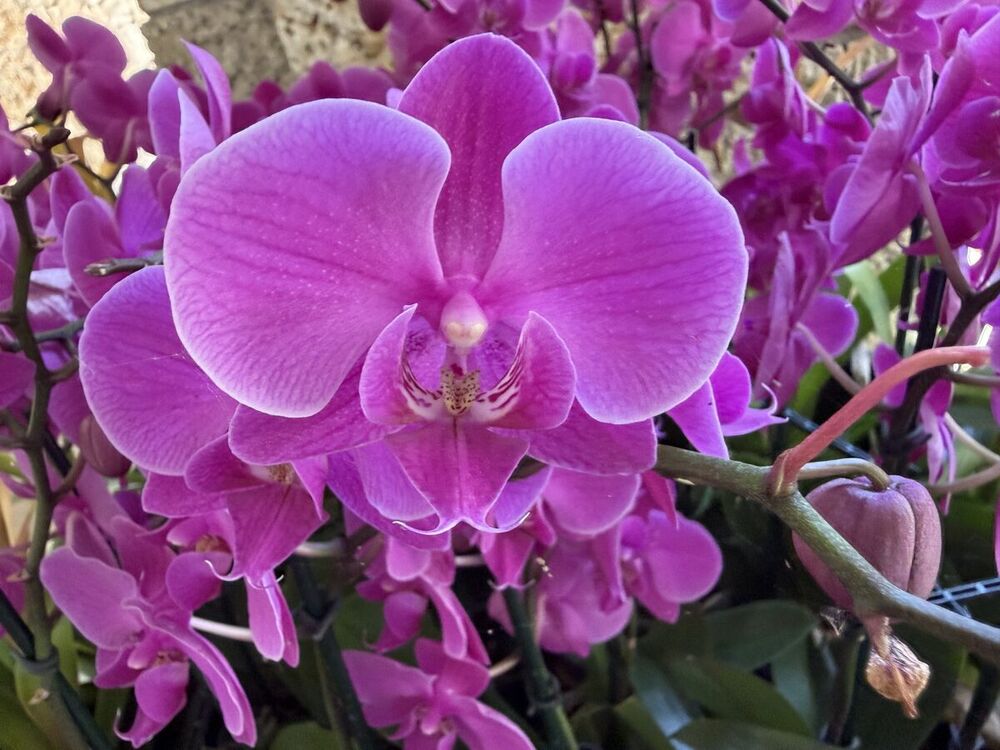
The monocotyledons generally have a single cotyledon in the embryo of the seed. This does not mean that they produce a single seed in the fruit. It means that the embryo has a single embryonic leaf. The monocotyledons often have leaves with parallel venation, adventitious or fibrous roots, floral parts in threes or multiples of three, and a growth different from that of many eudicotyledonous trees. Palms, coconut trees, banana trees, orchids, grasses, lilies, agaves and several herbaceous plants are monocotyledons.

There are, however, exceptions. Some monocotyledons, such as Dracaena, can become woody and branched, even if their growth is not identical to that of eudicotyledonous trees.

The eudicotyledons generally have two cotyledons in the embryo. When you open a bean or pea seed, you often see two fleshy parts that nourish the young seedling. The eudicots gather an immense diversity of families: Fabaceae, Rosaceae, Malvaceae, Solanaceae, Lamiaceae, Asteraceae, Euphorbiaceae and many others.

For a Plant Master, this difference is essential. It helps to decipher the patterns: leaf venation, type of roots, structure of the flowers, architecture of the plant, type of fruit and reproductive strategy.

The environment shapes plants

The evolution of plants did not happen in a vacuum. Plants evolved with their environment: sun, wind, rain, drought, cold, soil, salt, fire, insects, fungi, bacteria, animals, competition and diseases.

A plant cannot flee. It must respond where it is. It responds through its roots, its leaves, its stems, its flowers, its seeds, its thorns, its latex, its resins, its colors, its aromas and its molecules.

In dry environments, some plants reduce their leaves, develop thick tissues, store water or produce waxes. Faced with herbivores, some produce bitter, toxic or repellent compounds. To attract pollinators, others develop colorful, fragrant or nectar-rich flowers. To disperse their seeds, some produce fleshy fruits, winged seeds, floating seeds or structures that cling to animals.

We can say that the outside influences the inside. The environment exerts pressures, and the plant responds through forms, molecules, structures and strategies. Epigenetics today helps to understand how the environment can influence the expression of genes without directly changing the DNA sequence. But evolution is not limited to epigenetics. It also involves mutations, natural selection, genetic drift, isolation, coevolution, reproduction and time.

Plants: engineers of the planet

Plants do not merely live in ecosystems. They build them. They capture solar energy. They absorb water and minerals. They fix carbon. They produce sugars, wood, fibers, leaves, fruits, seeds, oils, pigments, aromas, resins and defense molecules.

They create soils, stabilize slopes, protect riverbanks, build forests, produce shade, retain moisture and offer habitats to other living beings. Through their roots, they interact with mycorrhizal fungi, bacteria and soil microorganisms.

Without plants, the Earth would not be the same planet. There would not be the same soils, the same forests, the same landscapes, the same food chains, the same atmosphere, nor the same possibility of life for humans.

Why this story is essential for a Plant Master

A Plant Master cannot limit themselves to identifying plants. They must understand their history. They must know why some plants produce spores, why others produce seeds, why the gymnosperms have naked seeds, why the angiosperms produce flowers and fruits, why the monocotyledons and the eudicotyledons present different patterns.

Understanding evolution helps to better understand the families, the forms, the organs, the molecules, the uses, the risks and the adaptations. It also helps to understand why some plants resist drought, why some are toxic, why some attract bees, why some plants are useful for ecological restoration, why some exotic species become invasive and why native species must be protected.

To become a Plant Master, you must learn to observe and understand plants in the present, but also in time. Every moss, every fern, every horsetail, every pine, every cycad, every palm, every orchid, every bean, every fruit and every flower carries a part of this story.

The evolution of plants teaches us that plant life has always innovated. It invented the cuticle, spores, vascular tissues, roots, leaves, seeds, pollen, cones, flowers, fruits, aromas, colors and defense molecules.

The 21st century needs people able to understand this story in order to better protect life. It needs Plant Masters. It needs Botapreneurs. It needs a new generation able to look at a plant and see more than a name: an evolutionary memory, a strategy of adaptation, a source of knowledge and a possible solution for the future.


Scientific references

  • Kenrick, P. & Crane, P. R. (1997). The Origin and Early Diversification of Land Plants: A Cladistic Study. Smithsonian Institution Press.
  • Wellman, C. H., Osterloff, P. L. & Mohiuddin, U. (2003). “Fragments of the earliest land plants.” Nature, 425, 282–285.
  • Raven, P. H., Evert, R. F. & Eichhorn, S. E. Biology of Plants. W. H. Freeman.
  • Judd, W. S., Campbell, C. S., Kellogg, E. A., Stevens, P. F. & Donoghue, M. J. Plant Systematics: A Phylogenetic Approach.
  • OpenStax. Biology 2e, chapters on plant evolution, gymnosperms and angiosperms.
  • Royal Botanic Gardens, Kew. State of the World’s Plants and Fungi 2023.

About the author — William Cinéa is a botanist-entrepreneur, holder of a master’s degree in botanic garden leadership and a certified nature interpreter. He is the founder of Botapreneurs and the creator of the Plant Mastery program. He works to make botany more accessible, more practical and more useful for communities. His goal is to democratize plant knowledge so that it serves health, food, agriculture, conservation, education, innovation, responsible landscaping, well-being and plant-based entrepreneurship.