By William Cinéa — Founder of Botapreneurs and creator of the Plant Mastery program.
Botany must become a science of life again.
It must not remain locked in laboratories, specialized books or universities. It must return to schools, families, gardens, farms, cities, communities, businesses and territories. Because everyone uses plants. We eat them, we cultivate them, we water them, we cut them, we import them, we transform them, we use them for health, decoration, agriculture, the economy, beauty and well-being. Yet very few people truly learn to understand them.
A contradiction of our time
This contradiction is one of the great problems of our time. Humanity depends on plants, but it moves further and further away from the knowledge of plants. Many people can recognize a commercial brand, an app or a technological device, but cannot recognize the plants growing in front of their house. Many children grow up without learning the parts of a flower, the function of a seed, the role of roots or the importance of leaves. Some people are even afraid to touch plants. Others see all spontaneous plants as weeds to be eliminated.
Yet plants are at the foundation of life on Earth. They capture solar energy, take up water, minerals and carbon dioxide, and then transform them into living matter. They feed humans, animals, insects, microbes and ecosystems. They produce oxygen, protect soils, regulate landscapes, shelter biodiversity and provide an immense diversity of molecules used in food, medicine, perfumery, cosmetics, materials, agriculture and industry.
Plants are not simple. They are the result of a long evolutionary history. Over millions of years, they have developed shapes, colors, roots, leaves, flowers, fruits, seeds, aromas, latex, resins, thorns and adaptation strategies. Some live in dry zones, others in humid forests. Some tolerate salt, others grow on rocks. Some attract bees, butterflies, birds or bats. Others defend themselves against herbivores, fungi, bacteria or drought.
Each plant therefore tells a story. A story of soil, light, water, climate, competition, defense, partnership and reproduction. But to understand this story, a botanical education is needed.
When visible botany almost disappeared
For a long time, botany was a field science. The botanist observed, touched, smelled, compared, drew, collected, classified and named plants. They used their eyes to see shapes, their hands to understand textures, their nose to recognize scents, their intelligence to compare families and their experience to interpret plants in their environment.
With the development of modern science, botany became more cellular, more molecular, more genetic and more specialized. This evolution is important. It has allowed us to better understand the plant cell, tissues, photosynthesis, reproduction, molecules, genes and the invisible mechanisms of the plant. But for the general public, visible botany has almost disappeared.
Today, many people can use an app to obtain the probable name of a plant. This is useful. Smartphones, databases and artificial intelligence can help start a search. But knowing the name of a plant does not mean understanding the plant. An app can propose an identification, but it does not replace observation, field work, comparison, caution and the direct relationship with nature.
Teaching botany again
That is why we must teach botany again.
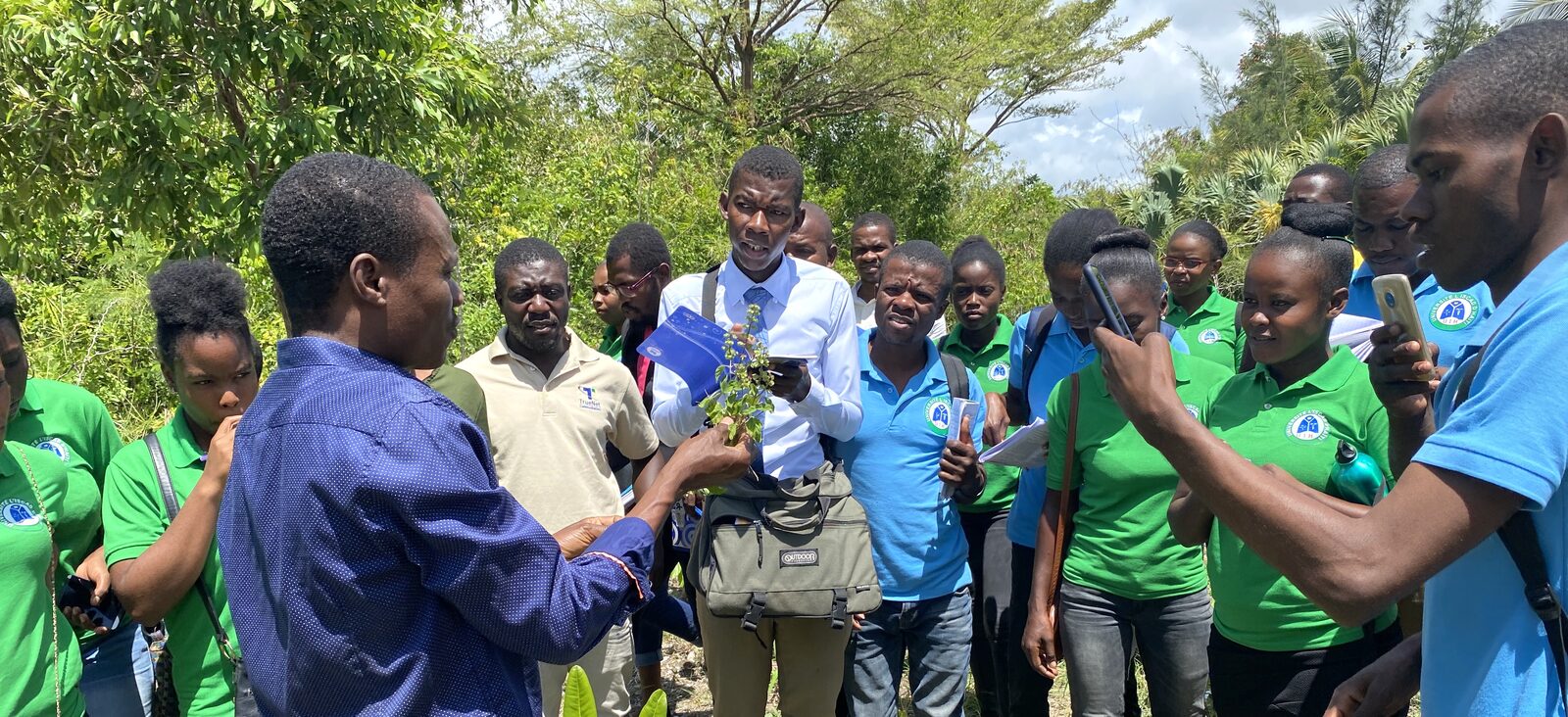
It must be taught in school, of course, but also at university, at home, in botanical gardens, on farms, in communities, in businesses and in development programs. Botany must not be reserved for future researchers. It must become a general culture of the living world.
Every child should learn what a root, a stem, a leaf, a flower, a fruit and a seed are. Every young person should understand photosynthesis, pollination, germination, the diversity of plant forms and the role of plants in ecosystems. Every family should be able to recognize a few food, medicinal, toxic, aromatic or useful plants of its territory. Every country should know the plants that underpin its health, its food, its biodiversity and its identity.
Teaching botany again is not only about transmitting scientific knowledge. It is about training citizens capable of making better decisions. A person who understands plants chooses better what to plant in their garden. A farmer who understands plants protects their soil better. A nutritionist who understands plants better values local food resources. A herbalist who understands plants acts with more caution. A landscaper who understands plants creates more beautiful and more ecological spaces. A decision-maker who understands plants better protects the ecosystems of their country.
A botanical responsibility for every country
Every country has a botanical responsibility. Every territory has native species, endemic species, medicinal plants, food plants, toxic plants, aromatic plants, plants useful for bees, threatened plants and sometimes invasive plants. If a country does not know its plants, it risks neglecting what it already has. It may import species that are not adapted, destroy precious local plants, lose traditional knowledge and weaken its own resilience.
Botany is also a science of prevention. Today, there is much talk about treatments, but less about the role of plants in prevention. Fruits, vegetables, leaves, seeds, roots, spices and aromatic plants contain fibers, vitamins, minerals and a great diversity of molecules produced by plants. These molecules exist for a reason: some help the plant defend itself, others attract partners, others adapt to its environment. A diversified diet, rooted in local plants and used with knowledge, can support the health of populations.
The Plant Master: a reader of the living world
It is in this context that the concept of Plant Master is born.
A Plant Master is a person who learns to observe and understand plants with method. They do not limit themselves to memorizing scientific names. They observe the shapes, leaves, flowers, fruits, seeds, roots, latex, scents, habitats, botanical families, molecules, uses, risks and strategies of plants. The Plant Master seeks to understand the plant from the outside in: its morphology, its ecosystem, its family, its probable chemistry, its interactions and its potential for humans and nature.
The Plant Master is a reader of the living world.
They can be a student, farmer, beekeeper, gardener, landscaper, nutritionist, herbalist, educator, entrepreneur or simply a Plant Enthusiast. What defines them is not only a diploma. It is their ability to observe, document, compare, understand and pass on the knowledge of plants with responsibility.
The Plant Mastery program, created with this vision, aims to help people recover this ability. It is not only about learning the names of plants. It is about learning to see what most people no longer see: the patterns, the families, the organs, the strategies, the uses, the risks, the relationships and the opportunities hidden in the plant world.
From knowledge to action: the Botapreneur
But knowledge is not enough if it does not become action. This is where the concept of Botapreneur comes in.
A Botapreneur is a botanist-entrepreneur or a plant entrepreneur who transforms the knowledge of plants into projects, products, services, training, businesses, ecological solutions or innovations useful to communities. The Botapreneur connects botany to entrepreneurship. They see in plants not only natural resources, but also data, molecules, uses, strategies, economic opportunities and solutions for health, food, agriculture, conservation, education and sustainable development.
A Botapreneuse carries this same vision. She understands plants in order to create, protect, pass on, undertake and develop solutions based on the living world. The world needs Botapreneurs and Botapreneuses, because the great challenges of our time demand people capable of connecting nature, science, economy and action.
My path, my conviction
This conviction also comes from my own path. I am William Cinéa, botanist-entrepreneur, founder of Botapreneurs, of the Jardin Botanique des Cayes and of the Plant Mastery program. My journey with plants began with observation, botany homework, flowers, books, training, field trips, forests, botanical gardens and ecosystems. The creation of the Jardin Botanique des Cayes marked me deeply, because it forced me to understand plants not only as species to name, but as living beings to conserve, document, explain and value.
The more I studied plants, the more I understood one thing: botany must not die in classrooms. It must become a popular, practical, rigorous and useful science again. It must speak to children, families, farmers, doctors, teachers, entrepreneurs, decision-makers and communities.
Training Plant Masters is not about creating one more title. It is about responding to an urgent need. The world needs people capable of recognizing the plants of their territory, of understanding food, medicinal, toxic, native, invasive plants or plants useful for ecological restoration. It needs women and men capable of protecting ecosystems instead of replacing them without understanding them. It needs people capable of transforming the knowledge of plants into health, food, agriculture, conservation, innovation and sustainable economy.
The world does not only lack technologies. It also lacks people capable of understanding the living world.
The world needs Plant Masters. The world needs Botapreneurs and Botapreneuses.
And this transformation begins with a simple decision: to learn again to look at plants, to understand them, to respect them and to teach them.
Botany must become a science of life again, because plants sustain life. If we want to protect the future, we must start teaching plants again.
About the author — William Cinéa is a botanist-entrepreneur, founder of Botapreneurs, of the Jardin Botanique des Cayes and of the Plant Mastery program. He works to make botany more accessible, more practical and more useful for health, food, agriculture, conservation, education, innovation and plant entrepreneurship.