By William Cinéa — Founder of Botapreneurs and creator of the Plant Mastery program.
A student can now earn a biology degree without being able to name the tree growing in front of the lecture hall where they earned it. They know the word “stomata,” but not the plant that adapts to drought along their road. They have memorized botanical families, but they cannot recognize a single toxic plant from their own region.
This is not an anecdote. It is a measured phenomenon. In 2022, a team of researchers described in Ecology and Evolution what they call “the botanical education extinction”: we teach fewer and fewer plants, we train fewer and fewer botanists, and this cycle feeds itself. Meanwhile, plants remain at the heart of our food, our health, our water and our climate. We are training graduates who know everything about the cell, and almost nothing about the living world around them.
The good news is that this problem has a solution. And this solution can give universities a leading role again.
How a living science became invisible
We must first understand how we got here. Before the 16th century, botany was a practical science: morphology, medicinal uses, direct observation, community knowledge. The botanical garden of Padua, created in 1545, embodies this era when plants were learned by observing them alive.
Then the microscope changed everything. In 1665, Robert Hooke published Micrographia. In the 19th century, Schleiden and Schwann laid the foundations of cell theory. Botany turned toward the invisible — the cell, the tissue, the molecule, the gene. This revolution was essential, and it must continue: it is what makes us understand why a plant produces a given molecule, how it resists stress, what effects its compounds may have.
But something was lost along the way. We taught the cell without letting students touch the leaf. We taught tissues without letting students observe the bark. We taught molecules without connecting them to the uses, the risks and the knowledge of communities. And in countries where laboratories are lacking, botany became a theory to be recited — a science to be memorized instead of a science to be lived.
What people who had never been to school taught me
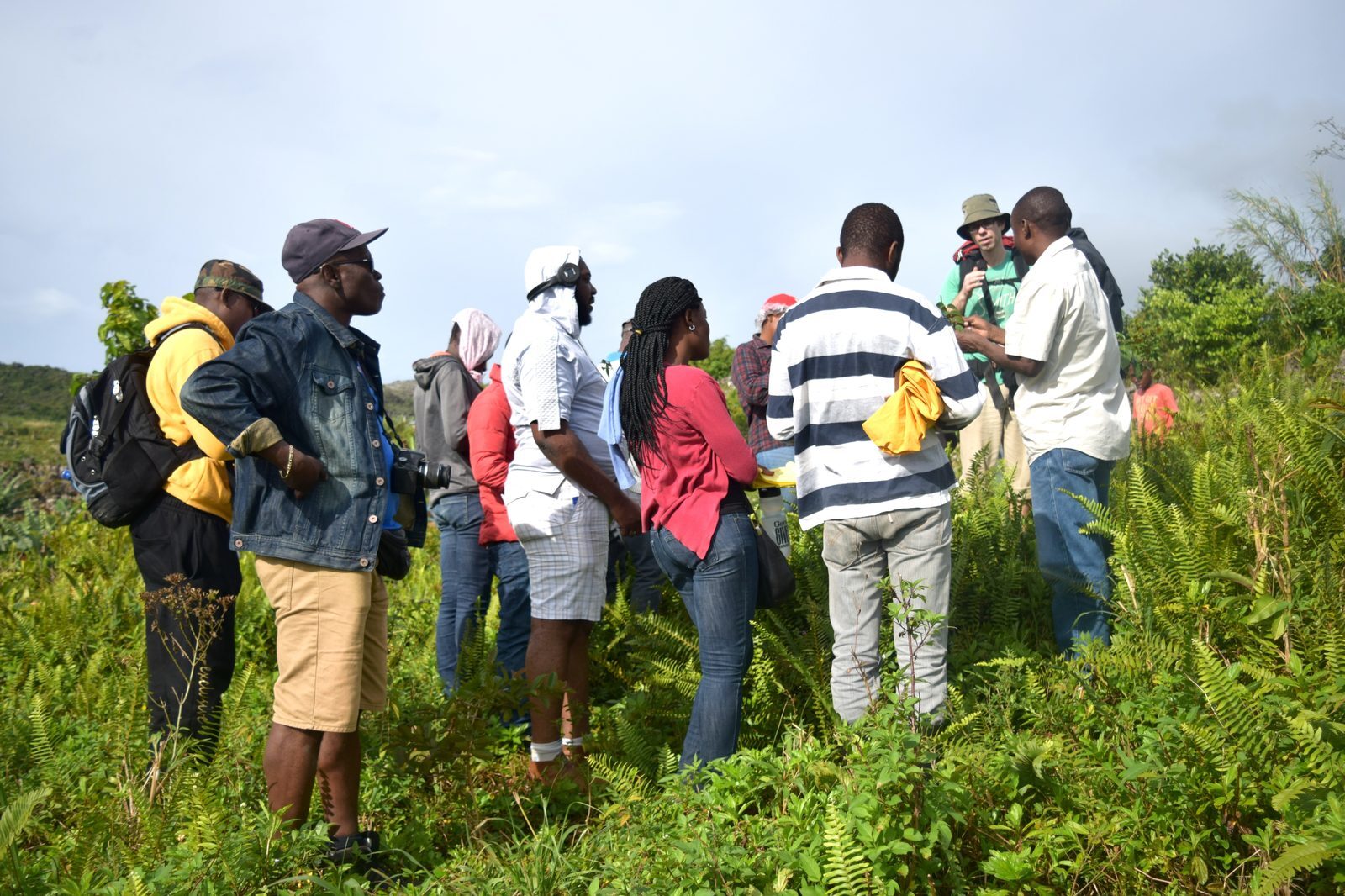
I studied plants at university. Yet some of my most precious lessons I owe to people who never had the chance to attend one. In the field, they taught me the toxicity of plants, the differences between closely related species, the medicinal and food uses, the flowering periods, the plants that hold soils or attract bees, and those that must never be used without caution.
This knowledge does not replace science. It complements it. And it made me understand something simple: solid botany rests on three sources that must come together — the laboratory, the knowledge of local communities, and field experience. Without the laboratory, depth is missing. Without local knowledge, memory and social usefulness are missing. Without the field, the plant itself is missing.
This is exactly what a university can bring together — if it decides to.
The solution: a two-stage path
The reform we propose is simple to understand. It leads the student from the living plant to innovation, in two major stages.
The first stage trains a Plant Master: a person who learns to decipher plants with method. Even before entering molecular specialization, the student learns to observe, identify, dissect a flower, recognize a family, use a flora, make a herbarium, distinguish a toxic plant from a useful one, dialogue with communities and understand an ecosystem. This foundation should not be reserved for future botanists: agronomists, foresters, doctors, pharmacists, nutritionists, landscapers, teachers and decision-makers will all work with plants. Only then do those who wish to go further deepen their knowledge through laboratory science — which becomes far more powerful when connected to the field.
The second stage trains a botanist-entrepreneur, or Botapreneur: a person who transforms the knowledge of plants into services, products, training, databases, gardens, restoration projects and concrete solutions. Not to commercialize nature without responsibility, but to create value that allows us to better protect, better pass on and better use plants — and to fund botany itself. This is how a science too often dependent on grants alone can become alive and autonomous again.
A curriculum ready to be adopted
Concretely, here is the pedagogical architecture we propose to universities: six levels, from the living plant to the enterprise.
| Level | Focus | What the student learns |
|---|---|---|
| 1 | Practical botany | Morphology, identification, families, herbaria, floras, organs, habitats; local, toxic, food, medicinal, invasive, native plants and plants useful for restoration |
| 2 | Field botany | Regular outings in ecosystems, gardens, farms, forests, wetlands, markets, mountains, coastlines; observe, document, photograph, map, collect, interpret |
| 3 | Ethnobotany & local knowledge | Dialogue with communities, document uses, respect rights, connect traditional knowledge to modern science |
| 4 | Laboratory botany | Cell, tissues, anatomy, physiology, genetics, phytochemistry, molecules, toxicology, adaptation mechanisms |
| 5 | Botanical data | Databases: names, occurrences, conservation statuses, uses, risks, photos, maps, collections, molecular and ethnobotanical data |
| 6 | Entrepreneurial botany | Transform knowledge into a project, service, training, product, consulting, innovation, enterprise or conservation program |
This path does not require giving up molecular botany. It requires bringing it together with the field, communities and action. The goal is not to choose between the two: it is to unite them.
What a university gains
Now imagine a university that adopts this path. Its students no longer leave only with a diploma: they know how to observe a flower in the field and then understand its tissues under the microscope; they know a medicinal plant in a community and can study its molecules with caution; they understand a native species in its ecosystem and can propose a restoration strategy.
This university trains more complete and more employable graduates. It becomes a reference hub for its region, a partner of cities, ministries, NGOs and businesses that need botanists. And thanks to entrepreneurial botany, it opens real opportunities for its students: databases of local plants, educational gardens, advising cities on resilient species, inventories for restoration projects, valorization of aromatic plants, botanical trails and therapeutic gardens.
Conversely, doing nothing has a cost. Every graduating class that leaves without knowing how to observe and understand plants is a part of living memory that fades away — at the very moment when soil degradation, climate change and biodiversity loss demand the opposite.
A call to universities
This is where Botapreneurs comes in. Our mission is to help universities, botanical gardens and institutions build this path: a botany that begins with the living plant, respects local knowledge, mobilizes modern scientific tools, trains Plant Masters and opens the way to botanist-entrepreneurs.
We propose to support institutions in co-building this curriculum, training the trainers, designing field outings and entrepreneurial modules, and connecting the university to the communities and opportunities of its territory.
If you lead a university, a department, a botanical garden or a training program, let’s talk. The botany of the 21st century will not settle for describing plants: it will reconnect people to the living world, and train a generation capable of understanding and protecting it. This generation begins in your classrooms — and on your trails.
Because plants are not only cells, names or molecules. They are living beings, evolutionary memories, sources of health, food, beauty, culture and resilience. And to understand them, the world needs a new generation of botanists, of Plant Masters and of Botapreneurs.
References
- Stroud, S., Fennell, M., Mitchley, J., Lydon, S., Peacock, J. & Bacon, K. L. (2022). “The botanical education extinction and the fall of plant awareness.” Ecology and Evolution, 12(7), e9019.
- UNESCO — Botanical Garden of Padua (Orto botanico di Padova), created in 1545.
- Robert Hooke, Micrographia, 1665.
- Matthias Schleiden and Theodor Schwann — foundational works of cell theory, 19th century.
- Judd, W. S., Campbell, C. S., Kellogg, E. A., Stevens, P. F. & Donoghue, M. J. Plant Systematics: A Phylogenetic Approach.
- Raven, P. H., Evert, R. F. & Eichhorn, S. E. Biology of Plants. W. H. Freeman.
About the author — William Cinéa is a botanist-entrepreneur, holder of a master’s degree in botanical garden leadership and a certified nature interpreter. He is the founder of Botapreneurs and creator of the Plant Mastery program. He works to democratize botanical knowledge to make it useful for health, food, agriculture, conservation, education, innovation, well-being and plant entrepreneurship.