Practical guide · Botanical family
Feed, heal, decorate — and warn us: understanding the Solanaceae family
For the general public, mentioning the Solanaceae family brings to mind familiar plants: the potato, the tomato, the eggplant, the chili pepper, the petunia, tobacco, or even deadly nightshade and Datura. Yet this family comprises nearly 2,800 species with food, medicinal, ornamental and forestry uses — some of which hide a formidable toxicity.
Whether you work in agriculture, nutrition, botany, natural medicine, pharmacology, ethnobotany, landscaping or conservation, you have everything to gain from knowing this family well. Understanding a plant family means adopting a systemic way of thinking: spotting patterns between genera and species in order to anticipate and make good decisions.
You thus learn to recognize regularities, to compare species, to understand their evolutionary relationships, and to connect their morphology, chemistry, defense mechanisms, uses and ecology. A true Plant Master thus learns to read nature like a living book.
A family of several thousand species
The exact number of Solanaceae varies according to classifications and evolves with research.
- Older works spoke of about 85 genera and 2,800 species.
- Today, databases such as Kew recognize 103 genera, while World Flora Online lists 107 genera and 2,789 accepted species. This simple gap clearly shows that systematics is not fixed.
The family is present almost everywhere in the world, but its greatest diversity is concentrated in the Neotropics, particularly in Central America and South America. A few genera give the measure of this richness: nearly 1,240 species of Solanum, more than 170 of Cestrum, around a hundred of Nicotiana and Lycium, and about forty of Capsicum. This is an immense reserve of biological diversity and a vast field of research.
How to recognize the Solanaceae?
There is no single appearance for the Solanaceae. In many genera, however, we find the same floral plan (a pattern):
- Five sepals, generally fused.
- Five petals, often fused.
- Five stamens.
- A superior ovary, generally formed by two carpels.
The simplified formula is written: K(5) – C(5) – A5 – G(2), superior ovary.
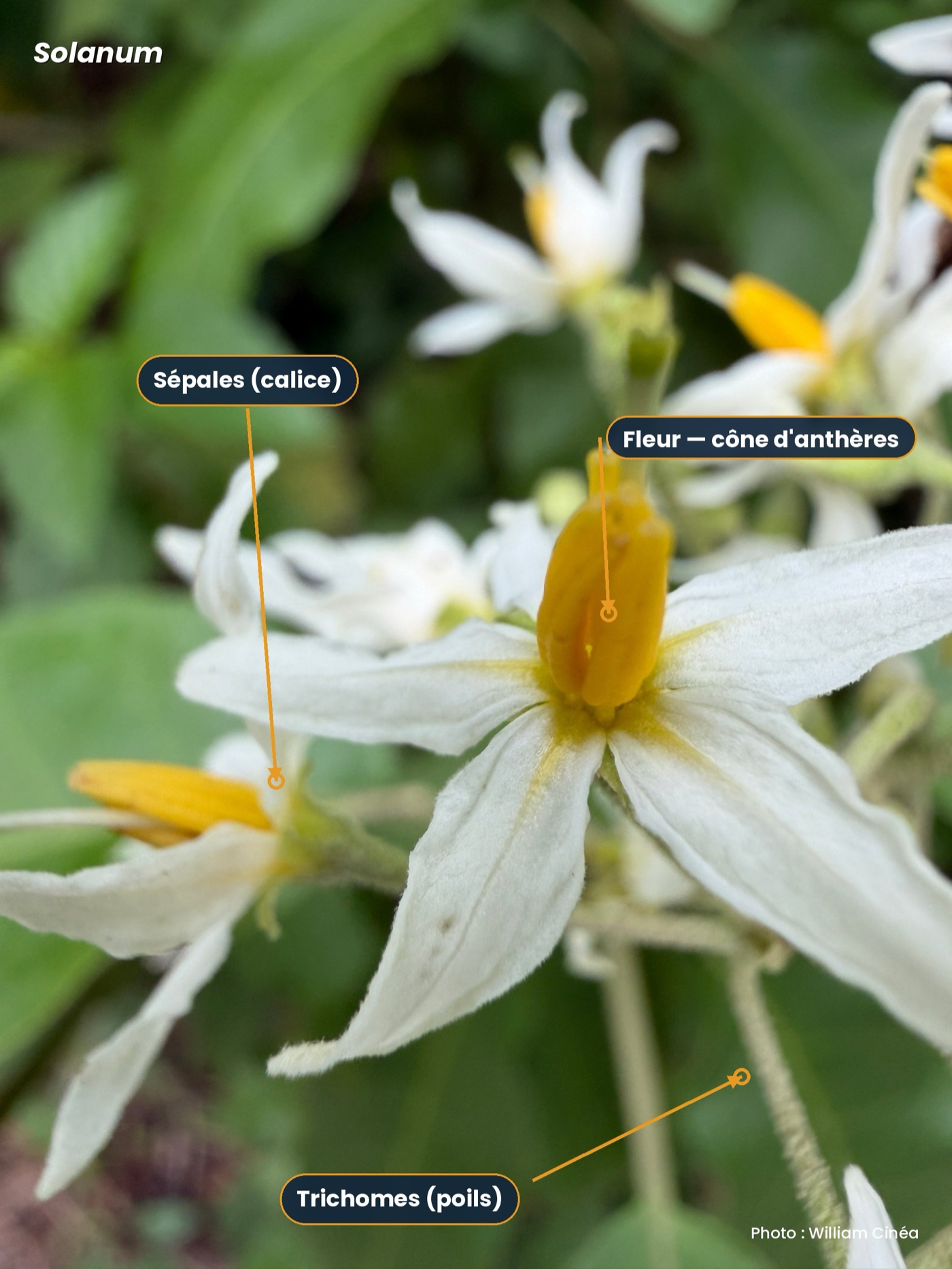
This common plan can produce flowers of very different appearances, but understanding the pattern allows us to recognize the kinship behind these forms. Often, the plant produces fleshy berries and may give off a slightly acrid smell or taste.
A family that has developed powerful defense systems
Since plants cannot flee, they have developed fascinating mechanisms to protect themselves, widely documented in the phytochemical literature.
Physical defenses. Simple or branched hairs, glandular trichomes, and in some Solanum, true prickles.
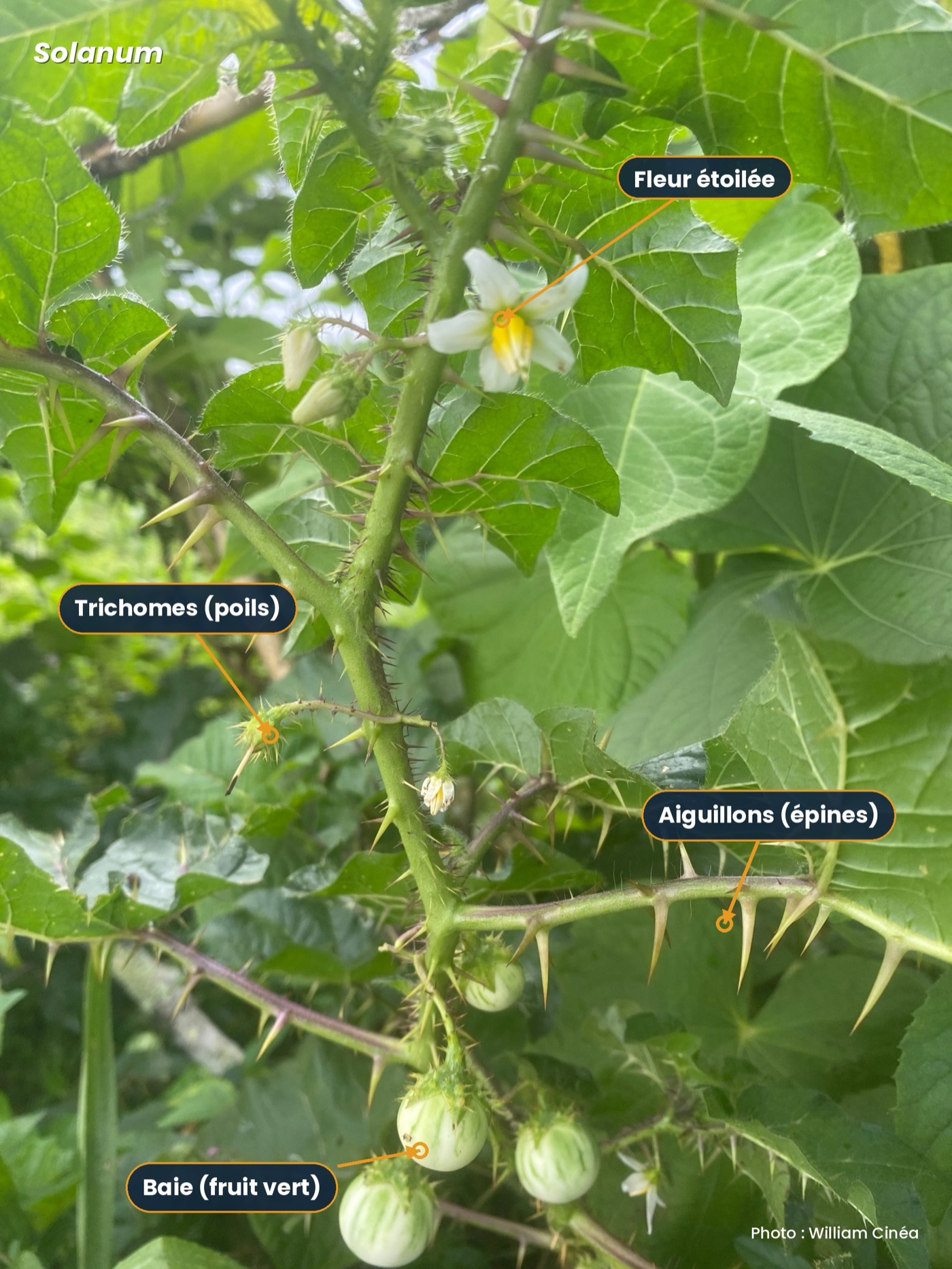
Chemical defenses. Often concentrated in the green parts, this defense relies on specialized molecules. In Solanum, we find steroidal glycoalkaloids (solanine, chaconine). Other lineages produce tropane alkaloids (atropine, scopolamine). Nicotiana produces nicotine, and Capsicum its capsaicinoids.
Six genera to understand the family
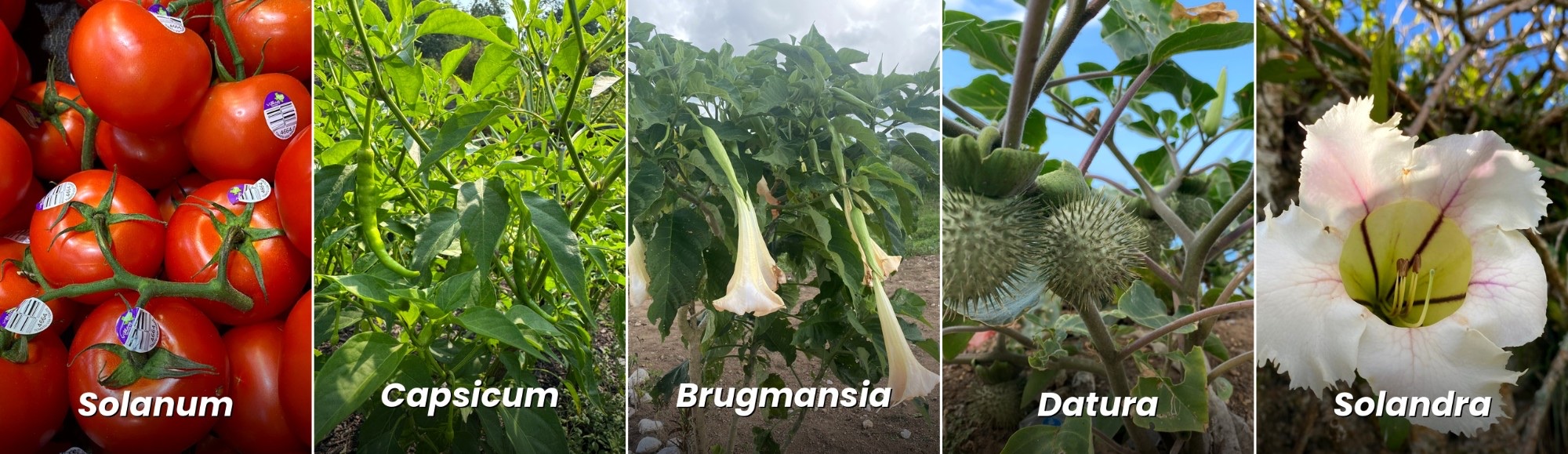
1. Solanum
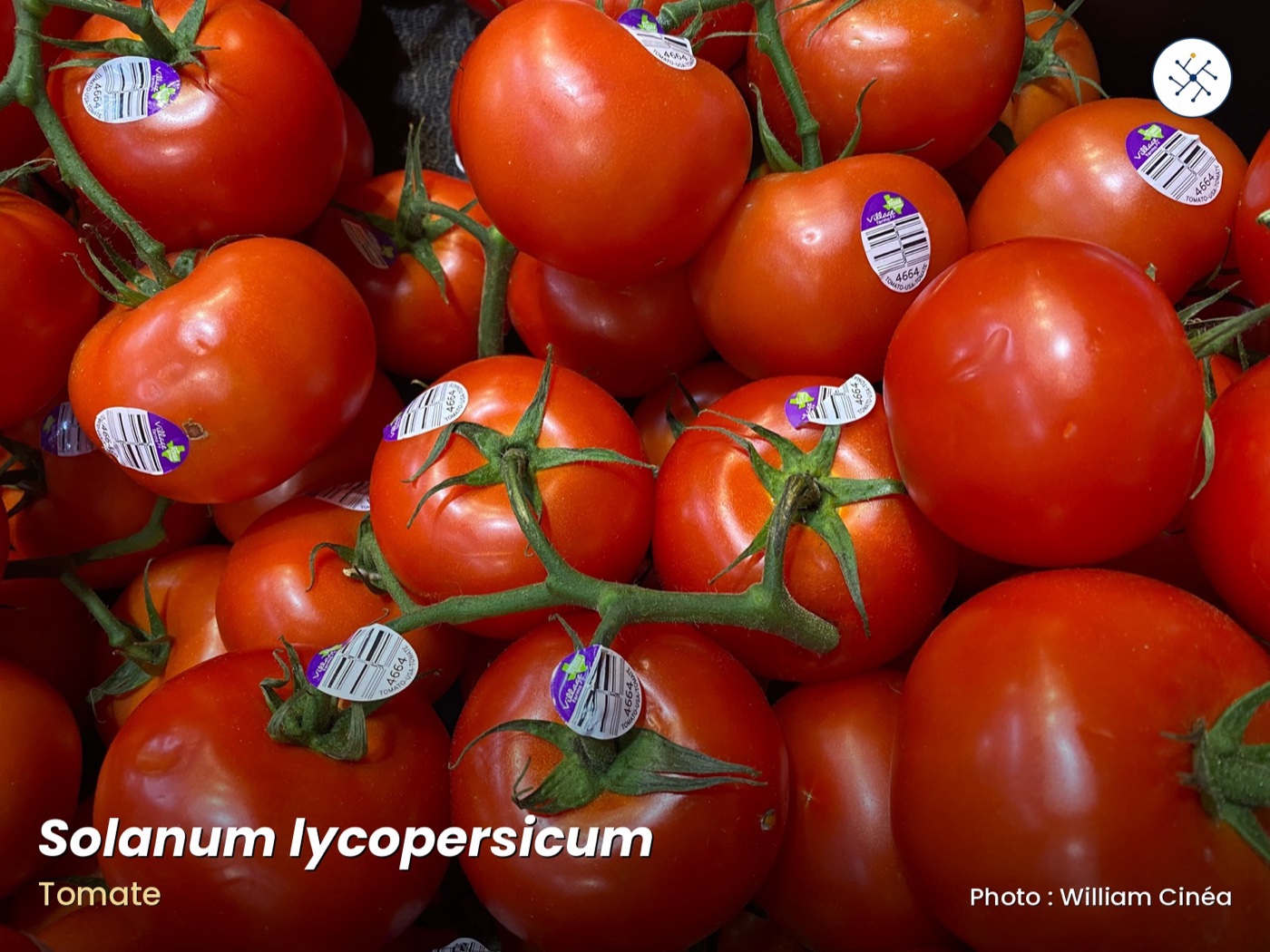
This is the most diversified genus (nearly 1,240 species). It includes several major food species such as the potato, the tomato and the eggplant. Its star-shaped flowers have yellow anthers gathered in a cone. Warning: the green parts and greened tubers contain solanine, which is highly toxic.
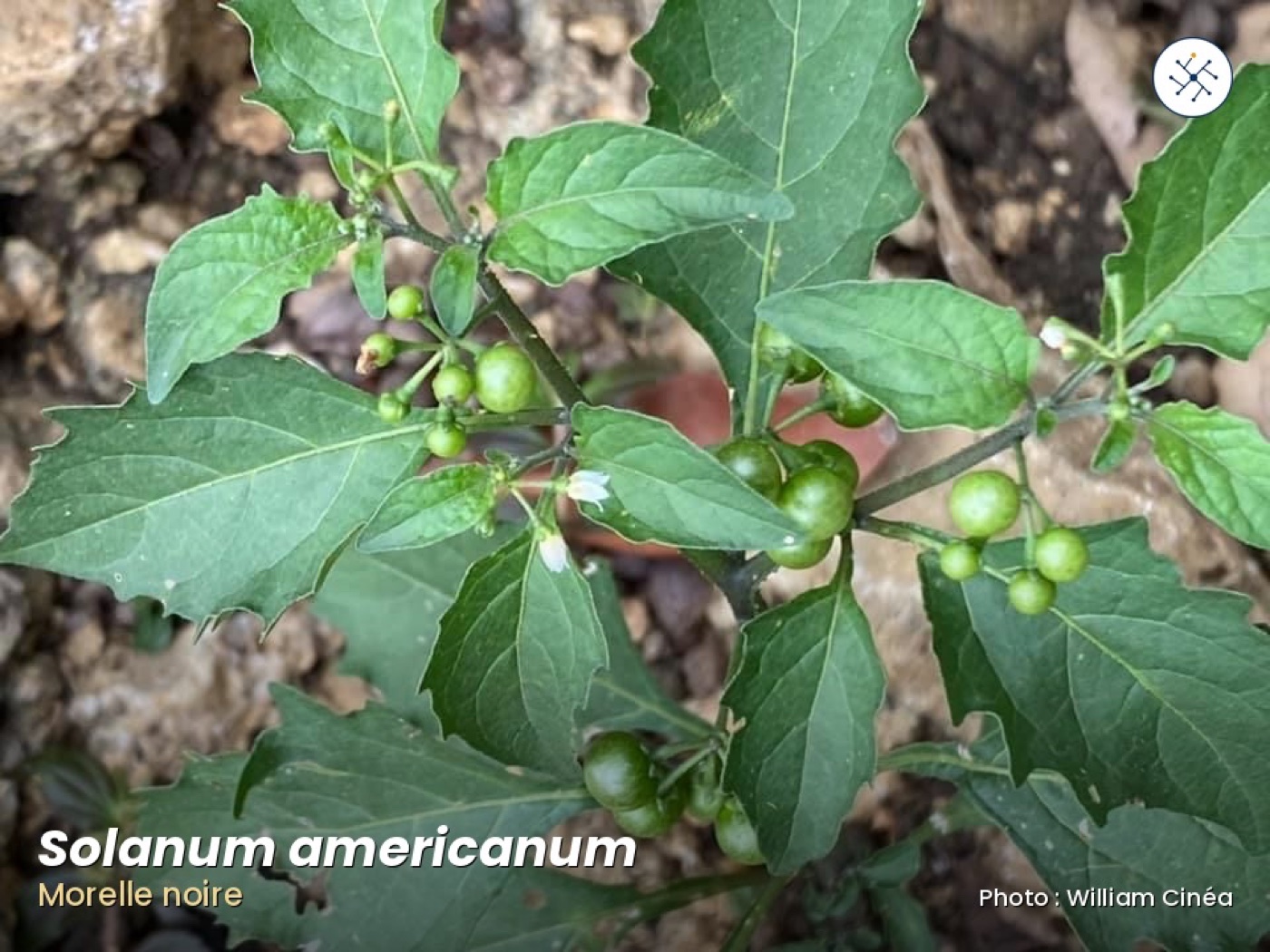
2. Capsicum
About forty species at the origin of all chili peppers and bell peppers. Their famous chemistry relies on capsaicinoids, responsible for heat, serving as a powerful natural repellent (and potential natural insecticide).
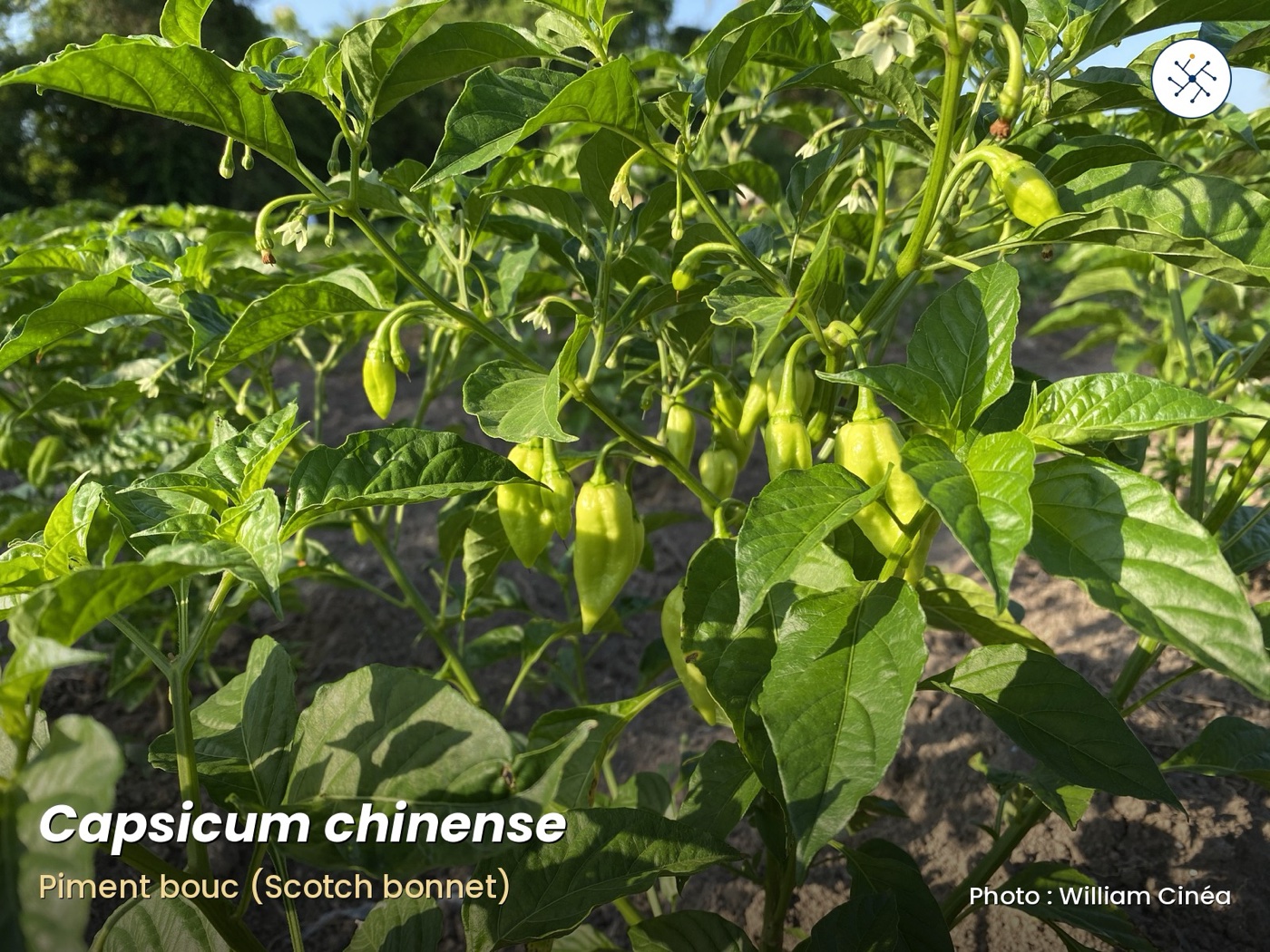
3. Nicotiana
Around a hundred species, including tobacco. The main alkaloid of their leaves, nicotine, is a powerful neurotoxin that the plant produces naturally to repel insects.
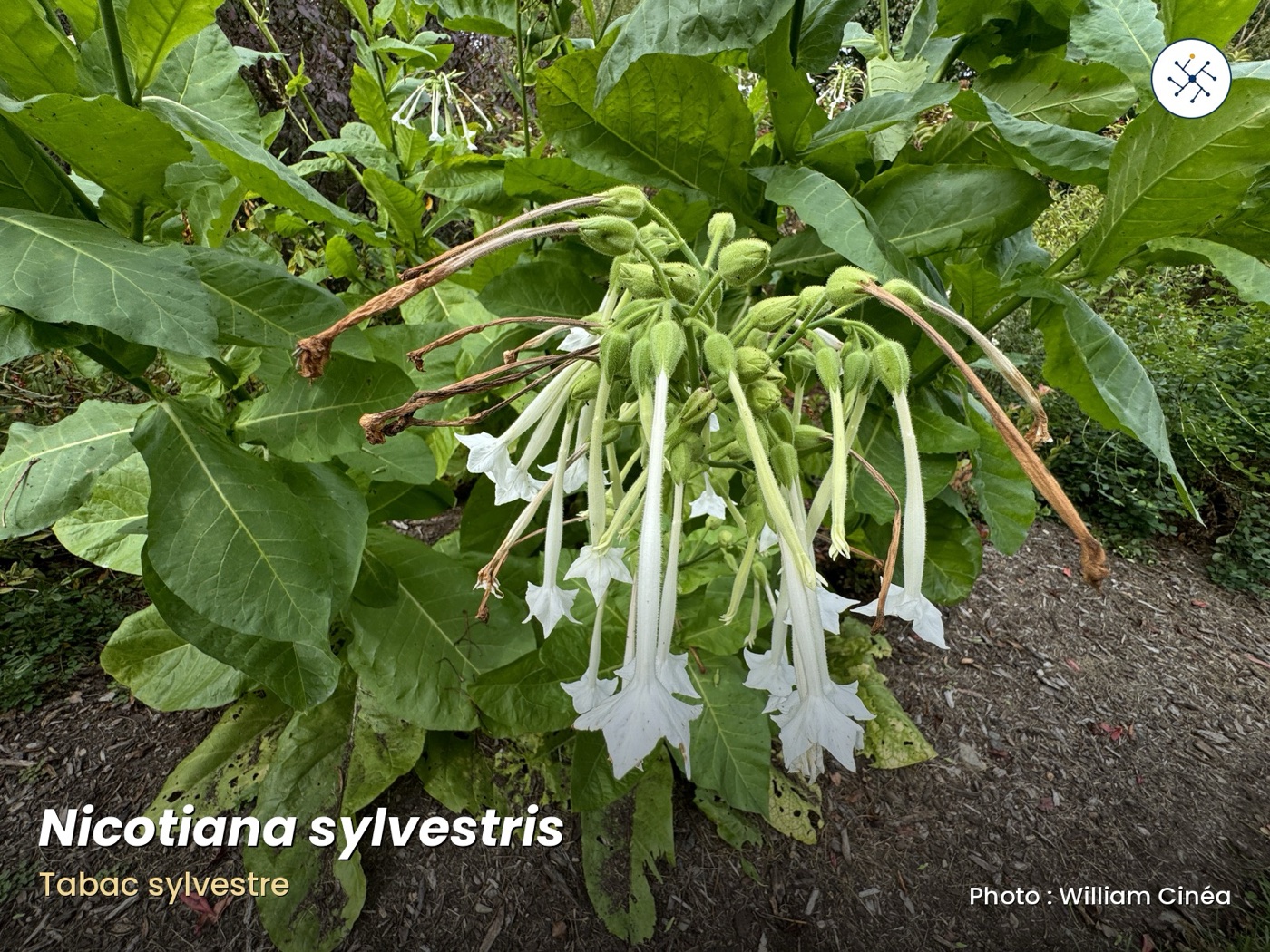
4. Cestrum
More than 170 species, very widespread in the Caribbean. In Haiti, we find endemic species such as Cestrum bicolor in the Macaya massif. Although cultivated for their fragrance, their leaves and berries are known to be toxic.
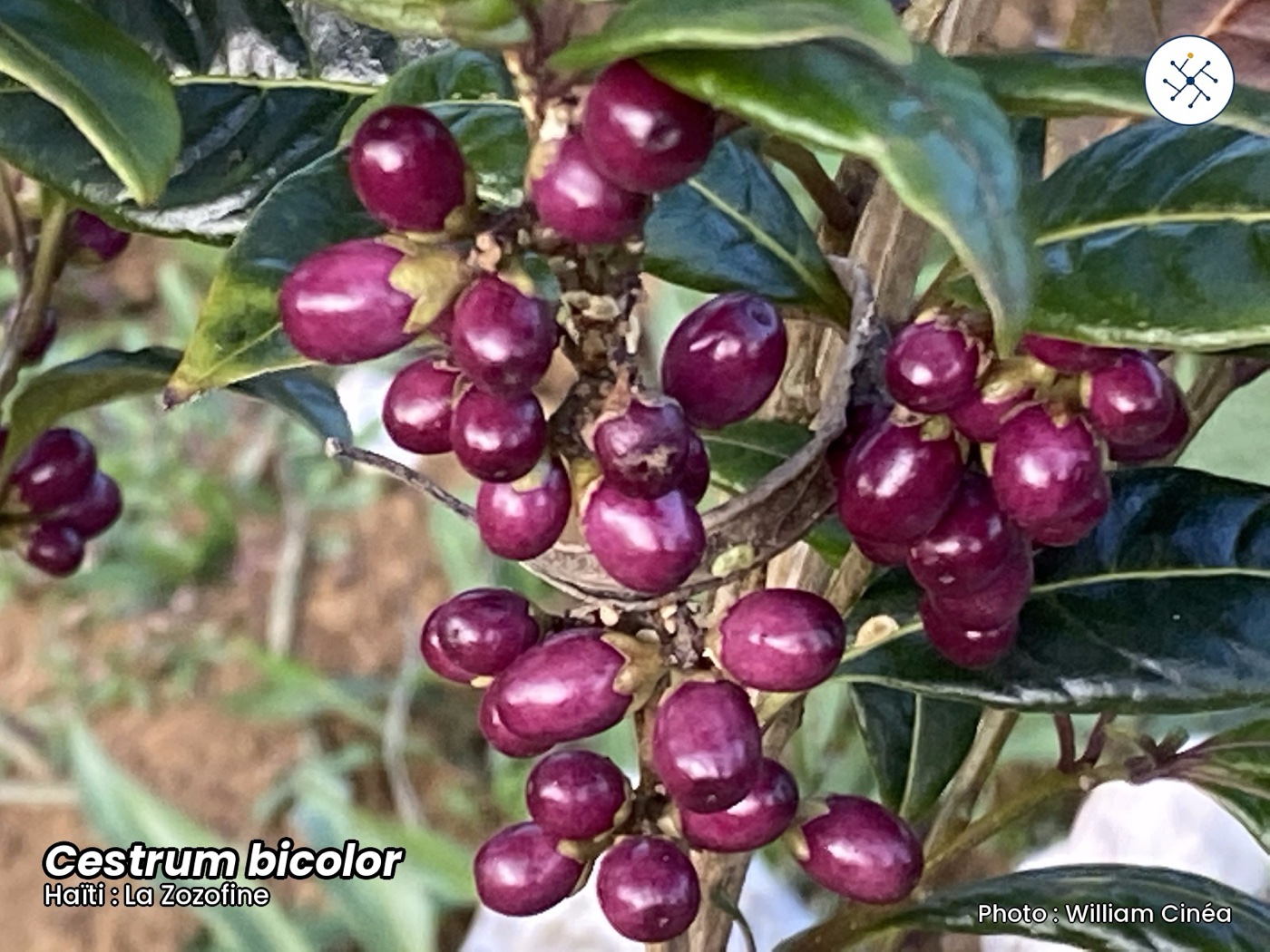
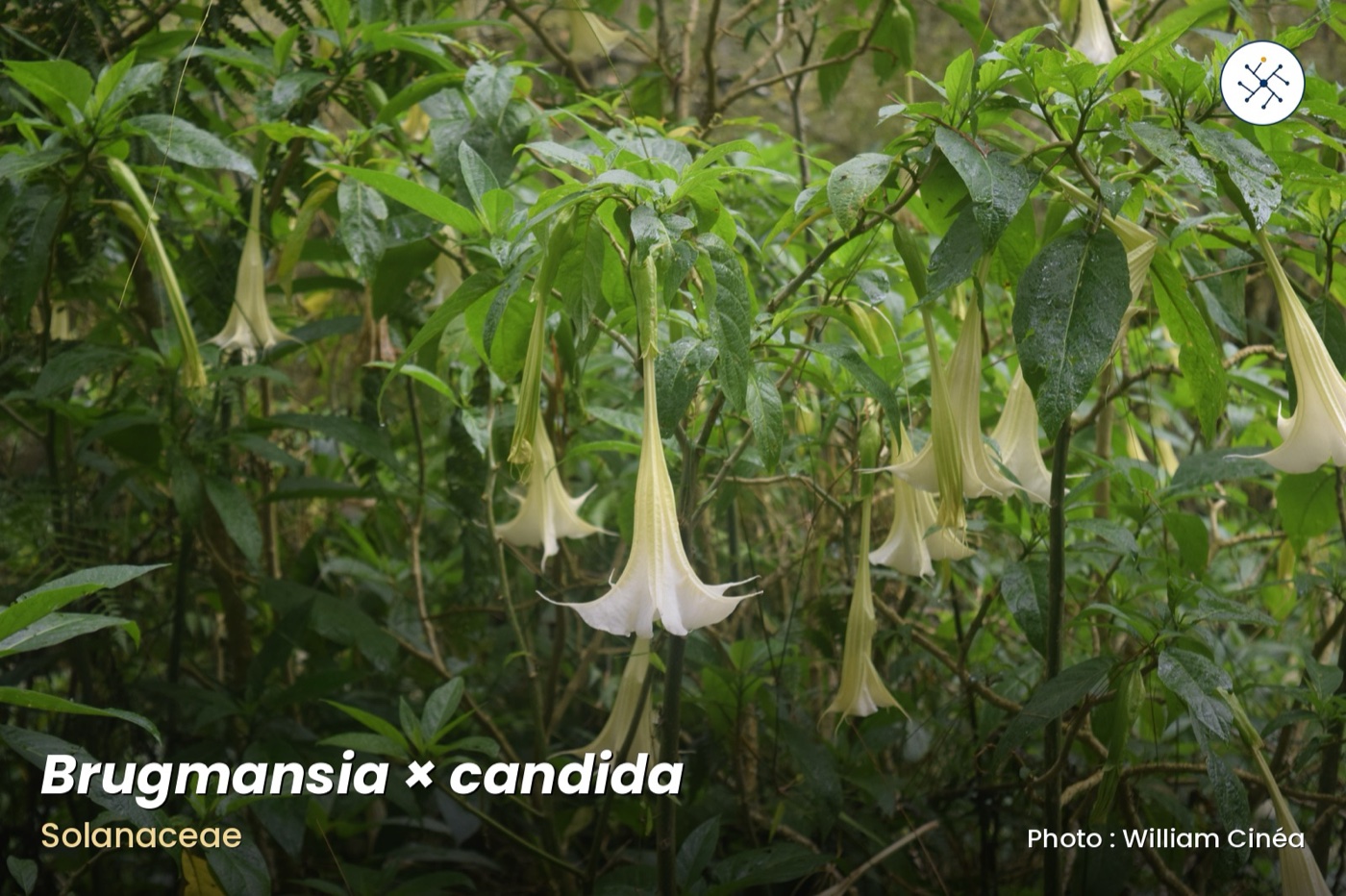
5. Brugmansia
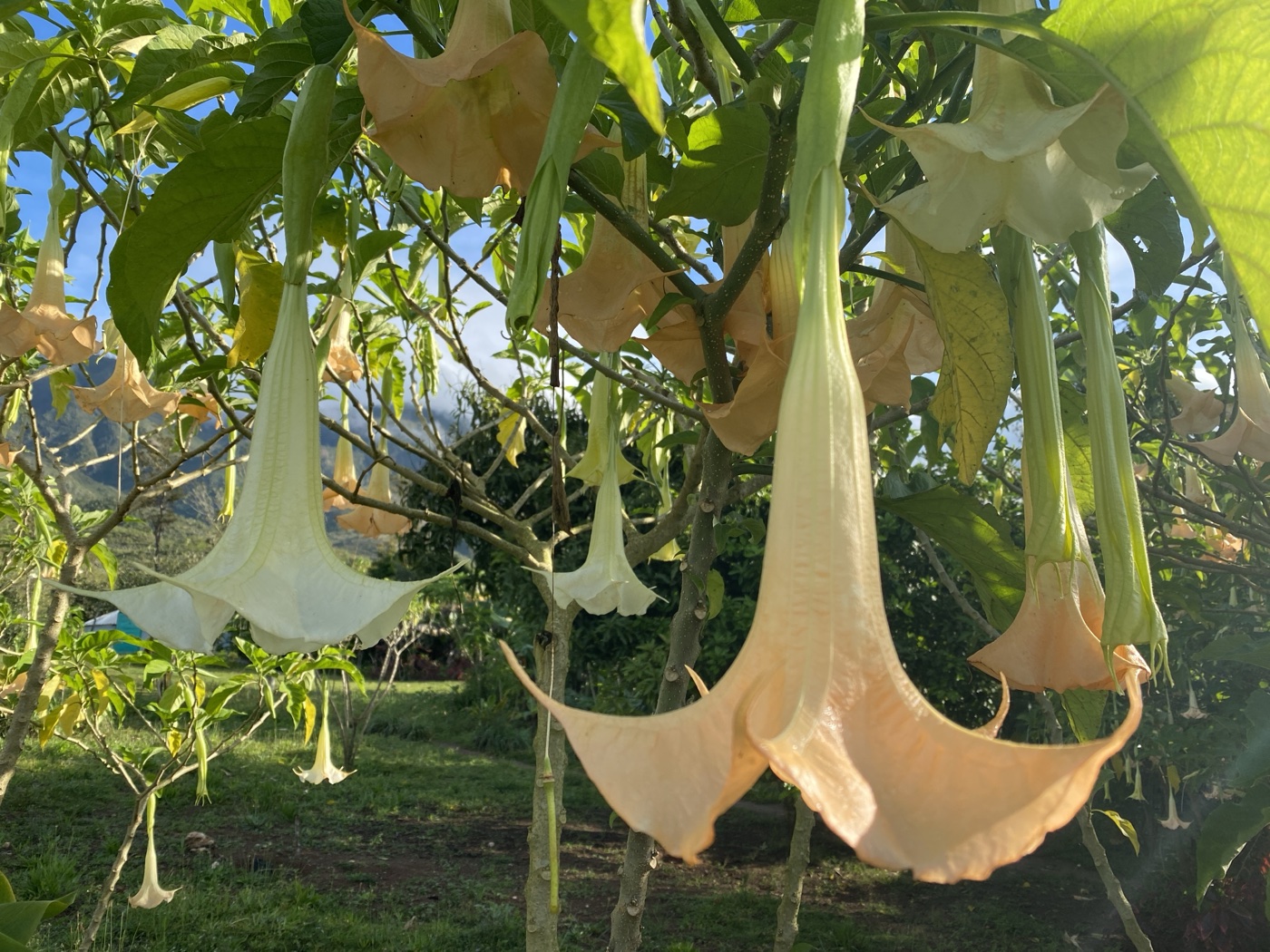
Nicknamed “angel’s trumpets”, these plants with immense pendent flowers are spectacular but extremely dangerous. They concentrate tropane alkaloids (scopolamine, atropine), powerful hallucinogens that can be fatal.
6. Datura
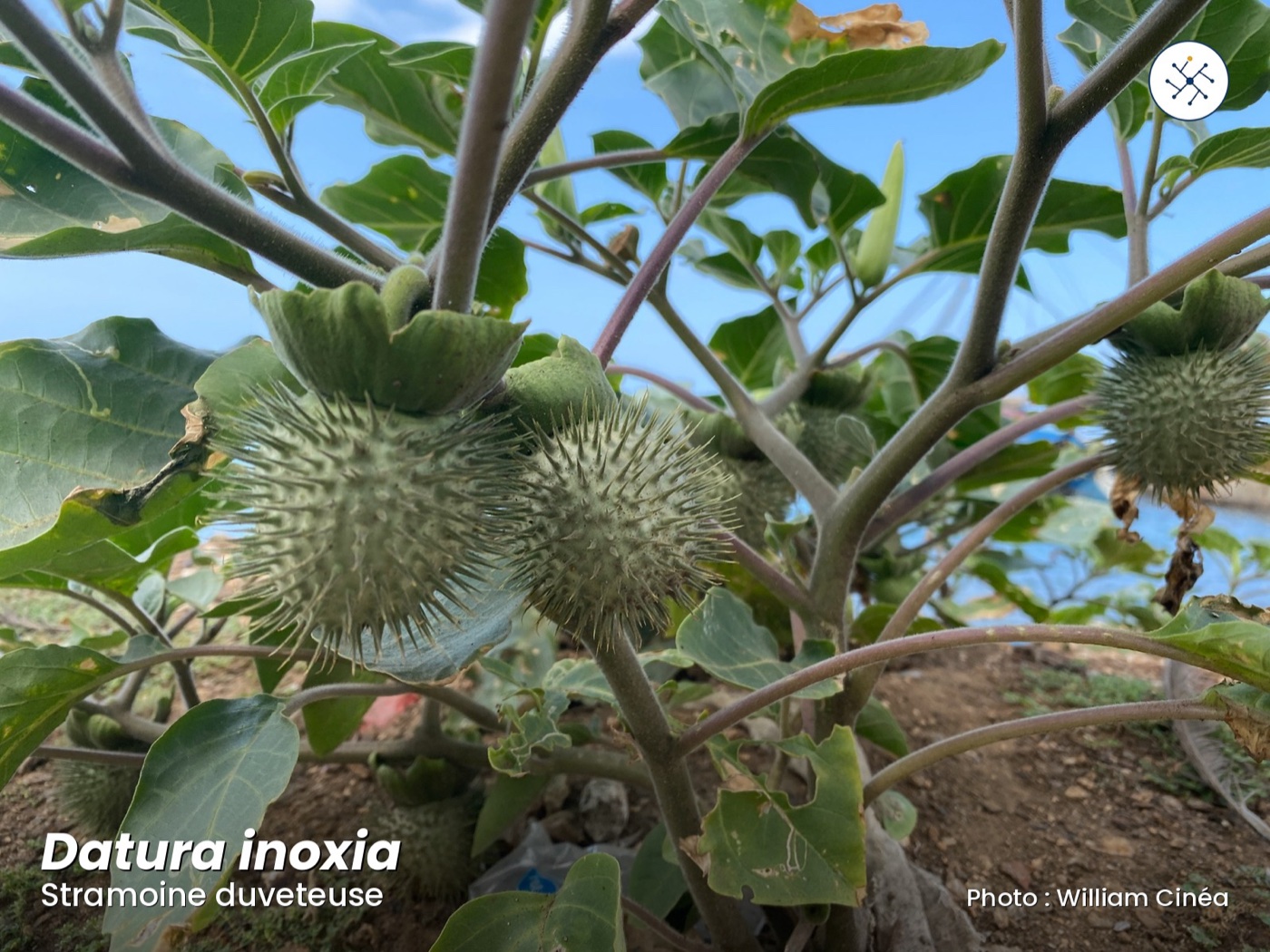
A close relative of Brugmansia, it is distinguished by its large upright flowers (not pendent) and its spiny capsules. All of its parts are highly poisonous to the nervous system.
From human use to public health
Agriculture and nutrition. The diversity of organs consumed is remarkable. We eat the fruit of the tomato and the pepper, the tuber of the potato (a modified underground stem), and exploit the leaves of tobacco.
The line between remedy and poison. The tropane alkaloids from Atropa belladonna, Datura or Hyoscyamus have recognized medical applications (anticholinergics). But without control, they cause severe poisoning: delirium, neurological damage, death.
Landscape, forests and conservation
While some Solanaceae species (such as Petunia, Brugmansia or Solandra) are used as ornamental plants, the family also includes shrubs and trees in the tropical forests of America.
Conservation is a critical issue: Cestrum bicolor (Haiti) is classified as “threatened” by Kew, and Goetzea elegans (Puerto Rico) is officially “Endangered” by the IUCN. Knowing a family means knowing how to spot the plants that must be protected.
Field lessons: the ornamental illusion and the danger of ignorance
As a researcher and botanist, a striking and sad reality emerges from the field: the lack of botanical knowledge leads to dangerous decision-making.
One of the major problems is the planting of highly toxic species for purely aesthetic reasons. People plant Brugmansia or Datura in public or family gardens solely for the beauty of their bell-shaped flowers, unaware that they are introducing deadly poisons into their immediate environment. Sometimes, these plants fall into the hands of ill-intentioned people.
Moreover, importing exotic plants without valid reason or ecological understanding threatens local biodiversity. Botanical education is an absolute necessity: it is a public health act, of prevention and safety, so that these plants are respected and used wisely.
And now, what remains to be discovered?
A great deal. There is still much to document regarding the ethnobotany of thousands of species, their potential for biological control, their phytochemistry, their ecological interactions and their resistance to climate change. The Solanaceae have evolved over millions of years; our responsibility today is to understand them better.
Which Solanaceae do you know in your country? How is it used? And above all, which species would deserve, in your opinion, more research?
Receive the PDF guide
Enter your details to download the Solanaceae guide immediately.